
Don’t Let the FL Everglades Fade Away!
Event Location: Orange County STEM Saturday
Competition: Energy Inspired Art
Division: 3-5
School: Hunter's Creek Elementary
Team Name: The Glade-iators
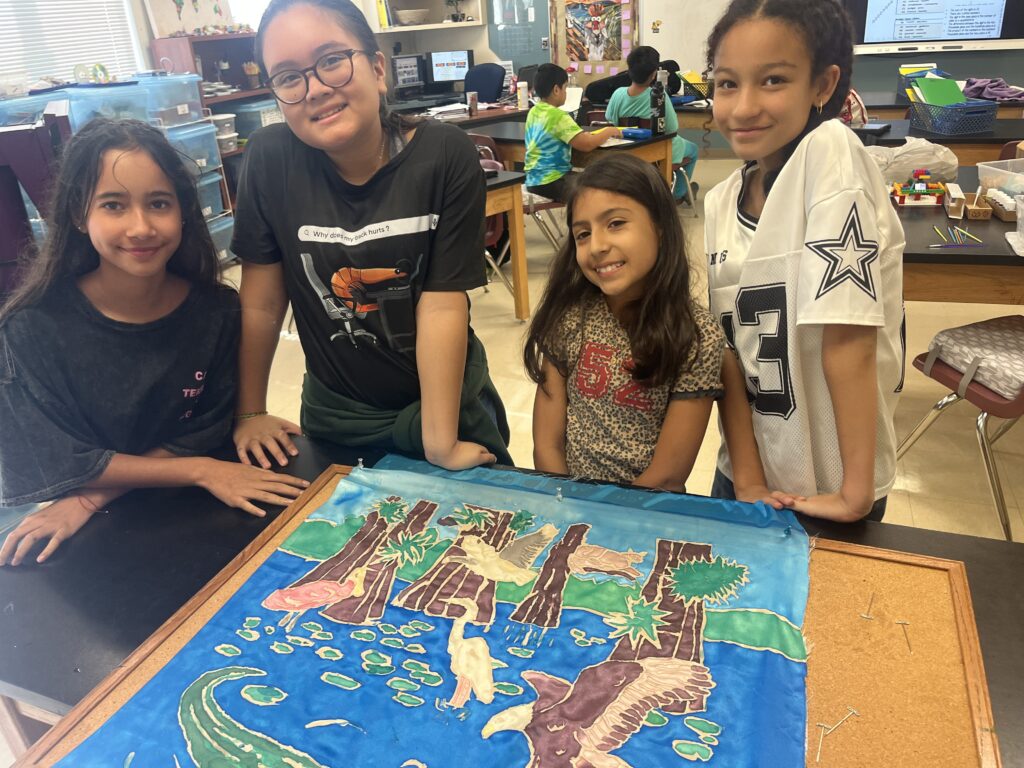
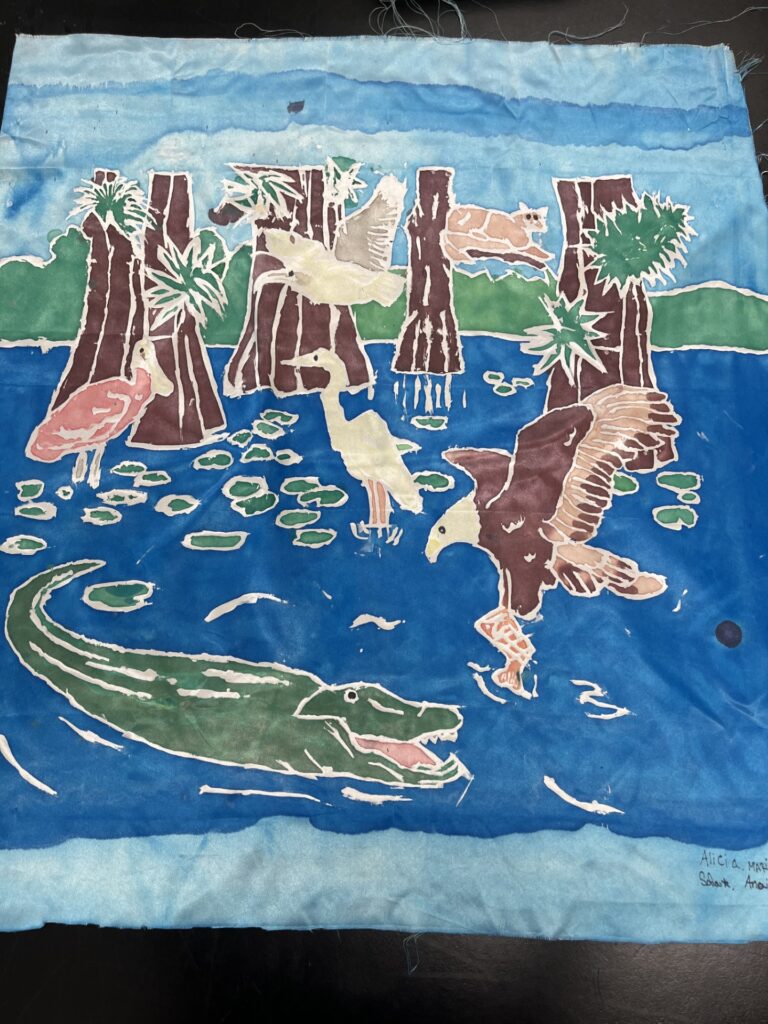
Project Name: Silk Painting the Everglades
Team Size: 5
Our Art From Beginning to End
Why Do Florida Wetlands Matter?
Even though the National Parks are fun to visit, wetlands aren’t just pretty attractions. They help with flood and storm protection (imagine giant sponges), water quality improvement (they’re even called “Nature’s Kidneys”!), and the Wetlands are an essential wildlife habitat.
Some of the endangered species in the Florida Wetlands are animals like:
• The Florida Panther
The Florida Panther is close to extinction because of habitat loss, vehicle collision, and humans building roads.
• The West Indian Manatee
The West Indian Manatee is becoming extinct because of collisions with boats and entanglement with fishing gear. Also because of a harmful algae bloom.
And Birds, such as:
• The bright (very) Pink Roseate Spoonbill
The Pink Roseate Spoonbill is close to extinction because of habitat loss from wetland drainage and pollution.
• And the endangered Wood Stork.
The Wood Stork is endangered because it loses its habitat because of wetland drainage.
If these important species disappear, then the food chain could be harmed. For example, If the Florida Panther goes extinct, other animals, such as deer, will overpopulate. The Predators are like pest control for overpopulation!!!
Why the Florida Everglades are Personal:
The glades are important – more than you think they are. Our wetlands are in our own backyard! The headwaters (the start) of the Everglades begins in Shingle Creek, which is right behind our neighborhood middle school and only 6 minutes from our elementary school! As the Everglades get polluted, our water could get affected.
This environment is important because it helps filter water for our natural surroundings, houses many of our endangered species, and protects us from floods and storms. The flow of the water slows down and allows sediments and other things to fall into the water.
The filtered water from the everglades flow into the ocean and help stop the water from the ocean by stopping salt water from intruding the fresh water aquifers which are underground layers of soil, rock, or sediment underground that hold fresh water for us to drink. It’s cool-and-weird nickname- Nature’s Kidneys- isn’t just for fun. The wetlands are able to remove nitrogen and phosphorus through physical, chemical, and biological changes, such as plants slowing water flow and, thus, filtering!
Blue Carbon is the carbon that the wetlands snare in the soil underneath the water. Coastal wetlands capture 10 times more carbon than inland forest because coastal wetlands have less oxygen and a slow water flow which degrades natural matter slower and allows more blue carbon to be captured.
Effects of Climate Change and Human Activity on the Wetlands
1. Drilling can require building roads that can harm wetland habitats. Also, when people build oil drills they cut off the natural flow of water.
2. Filling, grading, and removing vegetation are impacts of construction that destroy wetlands habitats. Filling is the addition of soil, dirt, and other vegetation. Grading is the changing of the original landform to make the level of the site even to make it suitable for construction.
• About 46% of Florida wetlands has been lost due to building houses and farms.
• Fertilizer from farms wash into wetlands and due to too much nutrients and algae grows blocking sunlight and releasing chemicals.
• The extra nutrients also help grow invasive species which destroy native plants.
•When there is too much freshwater being pumped in it allows sea water to come through and affects animals and plants that are used to freshwater.
The main sources of nitrogen and phosphorus entering the everglades is runoff. (runoff is when excess water from precipitation flows back to the ocean.) It causes problems like harmful algal blooms and invasive species causing the loss of native plants How We Can Help Save Our Wetlands?
The Comprehensive Everglades Restoration Plan is a program looking to restore the natural flow of the water. The natural water flow is important because it helps filter water and stops floods.
Conservation Policy:
1. Clean Water Act (CWA)
The Clean Water Act is the main federal law to control water pollution in the United States. If you don’t know, the CWA is a law that requires permits for any releasing of materials into waters of the United States,
2. Swampbuster provisions
This law was created to prevent using wetlands for farming use. If the wetlands are turned into farmlands, they won’t get money from the government.
What can we do to help?
There are some everyday activities that can make a huge difference protecting the ecosystem and water supply like:
Take shorter showers, turn off the water while brushing your teeth, and follow local watering rules like in Orange County we can water the lawn 2 days a week in summer and 1 day a week in winter.
Never feed wild animals, keep a safe distance from manatees and remind a car driver to slow down when they are close to a wildlife crossing.
Ask your family to not use a lot of fertilizer if they live close to water. It can go through the ground into the water.
Never leave trash around the wildlife and always stay on the trails in natural areas.
Share all your new learning with family and friends!
Sustainable Energy Solutions:
Farmers can put solar farms in places with no wildlife, or places that have already disturbed.
Vocabulary
Blue Carbon
Blue carbon is a carbon dioxide captured by the ocean and coastal ecosystems, mainly captured by the mangrove forests and salt marshes. If we don’t capture it, it can cause global warming and make the oceans more acidic, which hurts some sea animals and coral reefs.
Mangrove
There are three types of mangroves: the red, black, and white. They use their dense roots for reducing storm surge energy which is when a large amount of ocean water is pushed onto land.
Everglades
The Everglades is sometimes called the river of grass because it’s a wide, shallow, sheet of water covered with a lot of sawgrass, though it is very important for the water to flow because it is essential for maintaining water quality, flood control, and supporting ecosystems.
Saltwater Intrusion
Salt water intrusion is caused when the sea level rises, and then it allows denser saltwater to move inwards towards land and into the freshwater of the Florida Everglades.
Hydrology
Hydrology is the study of water’s movement. It is important because it needs the water flowing naturally just how humans need blood to flow in their bodies.
ART Representation
Materials:
Images of the Everglades for inspiration for our artwork
Wax Paper
Toothpicks
Gesso (a liquid primer used for painting, but not specifically silk.)
Silk paint
Satin
Paint brushes
Sticks
Procedure:
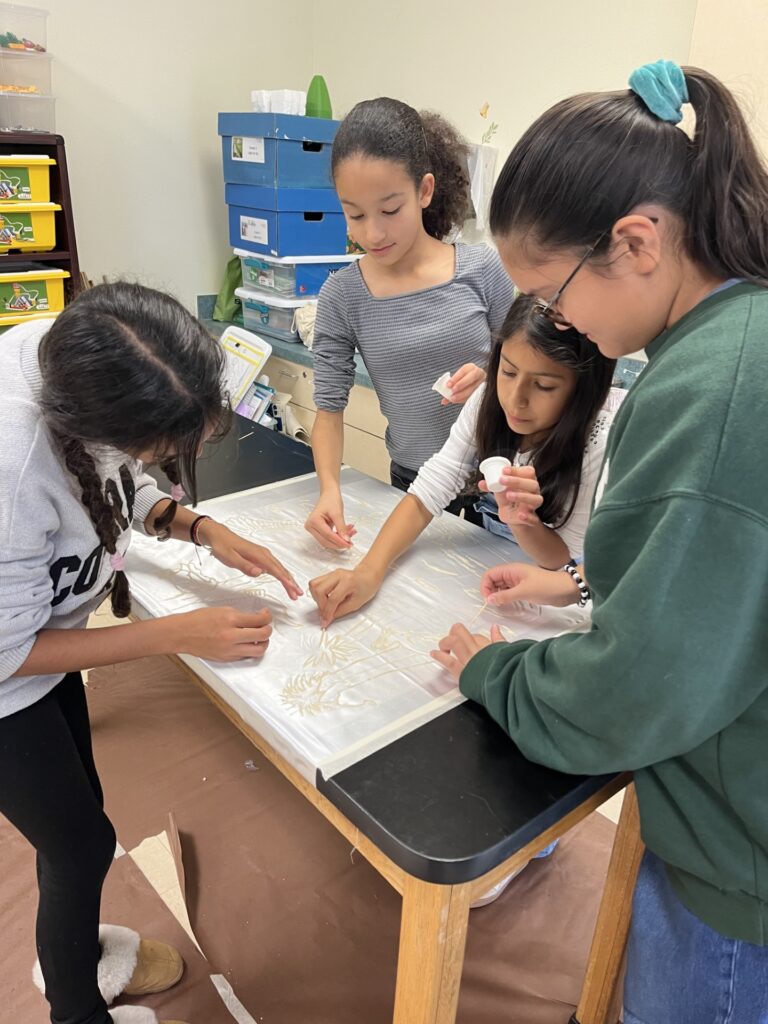
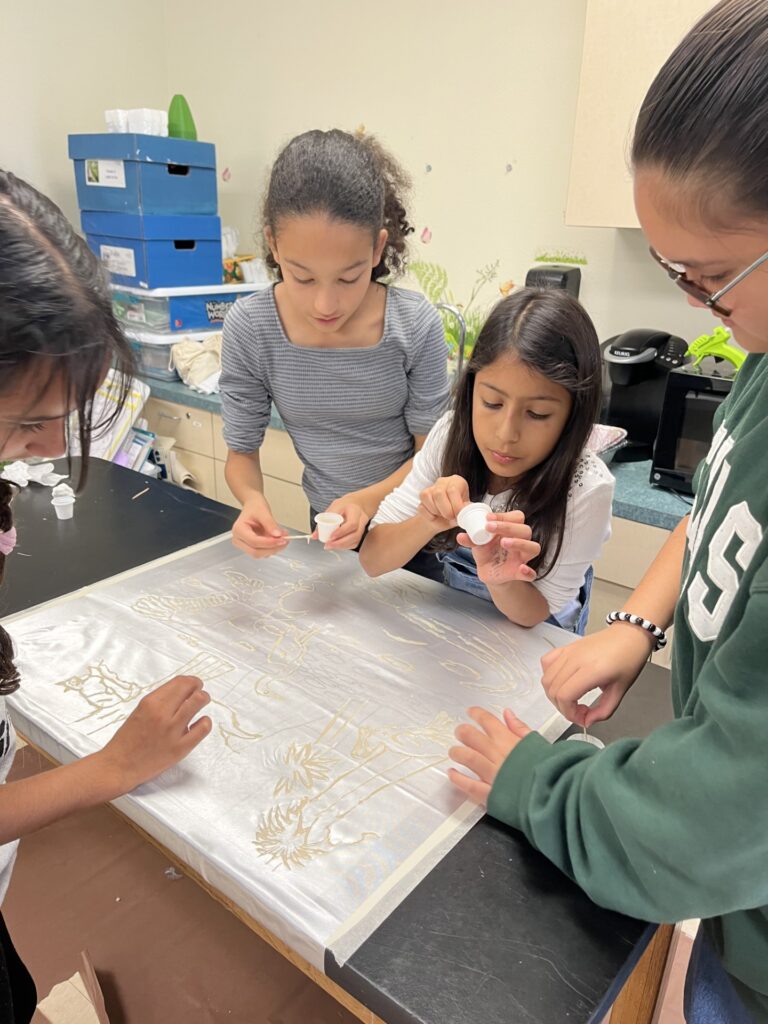
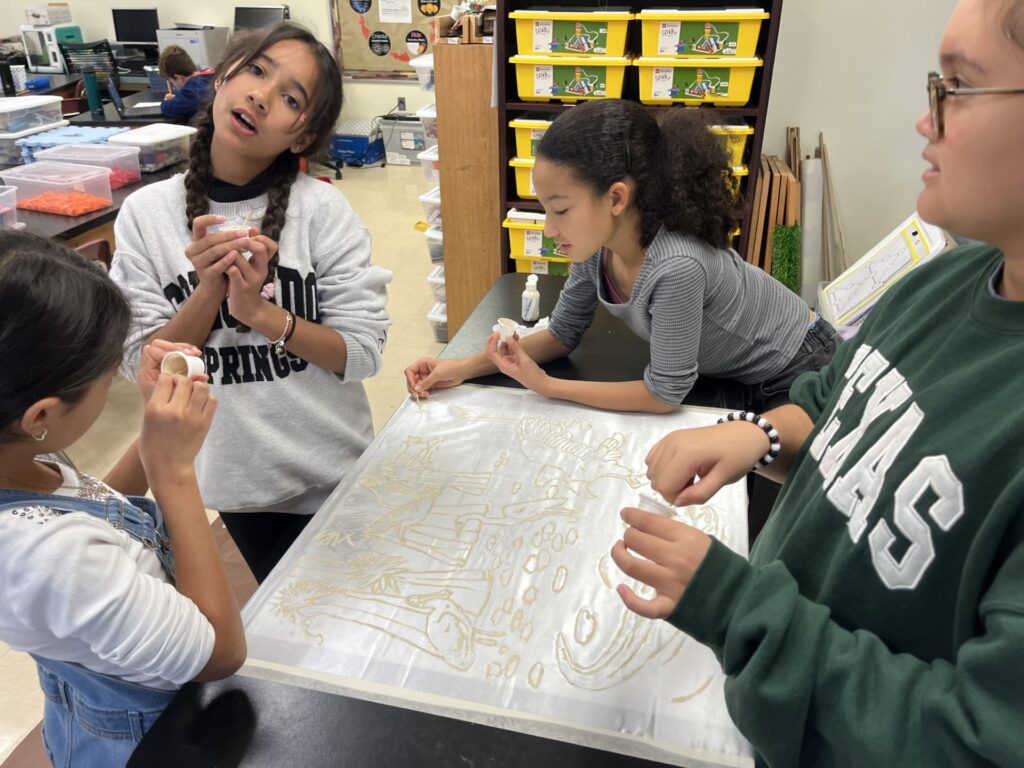
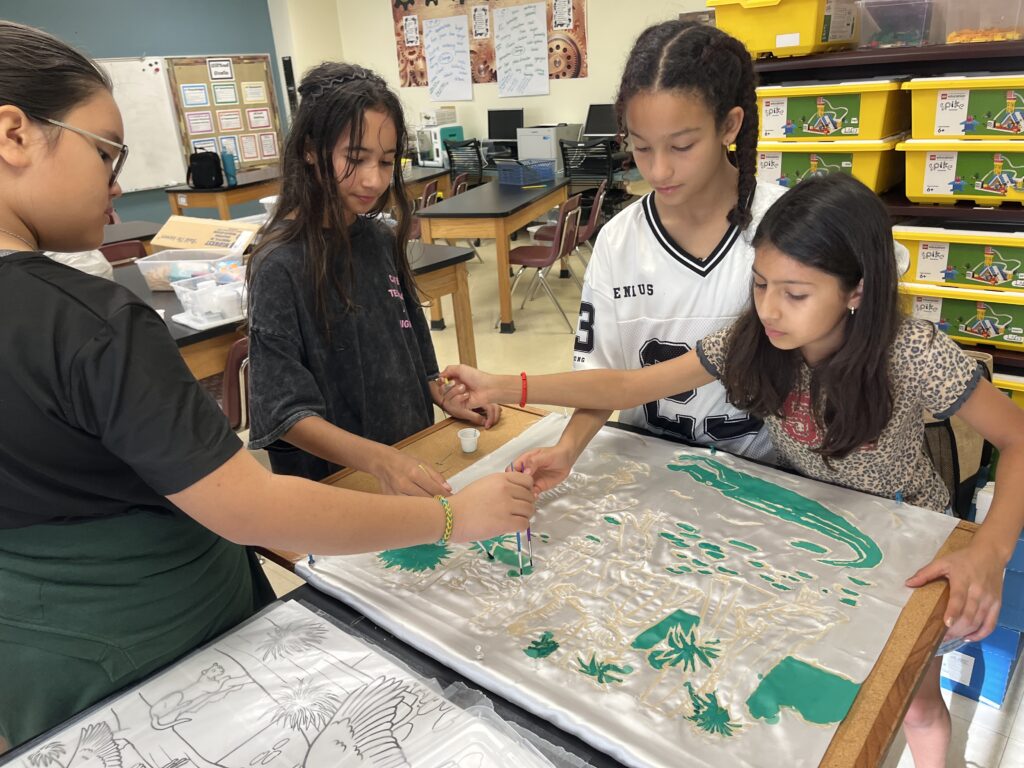
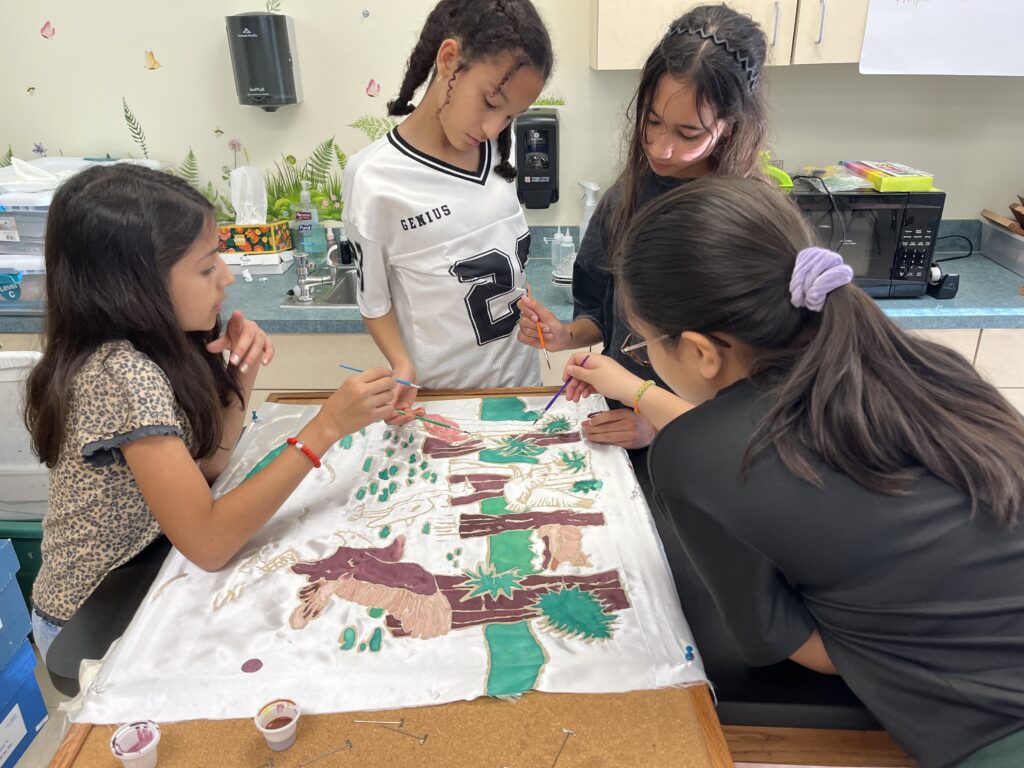
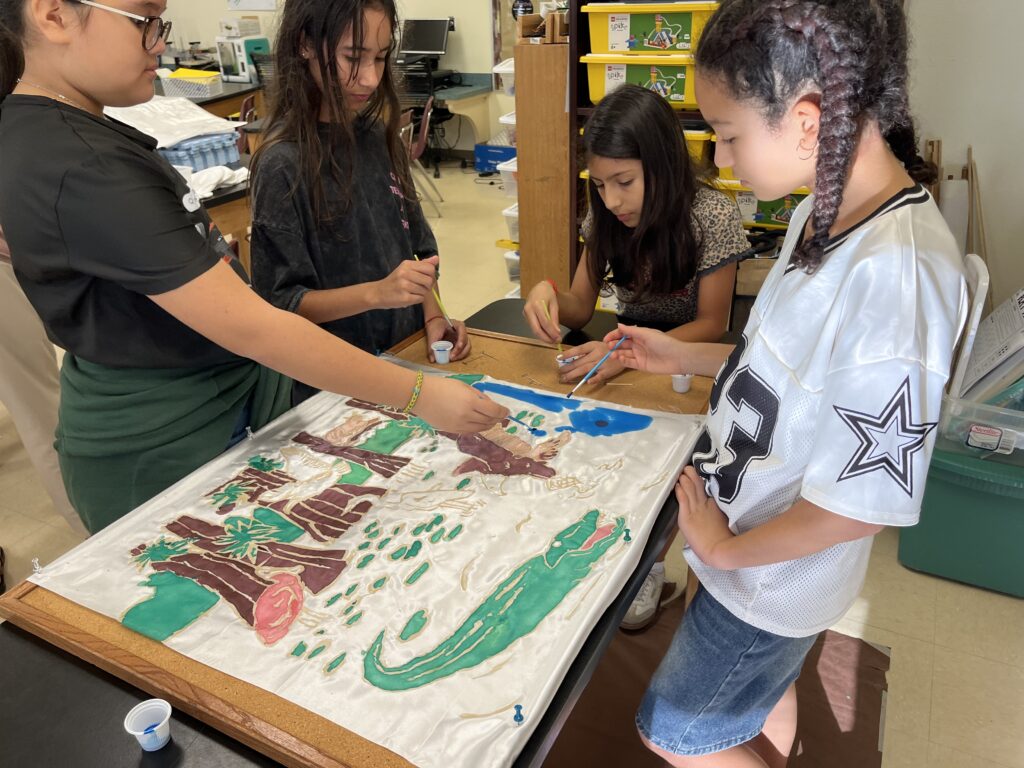
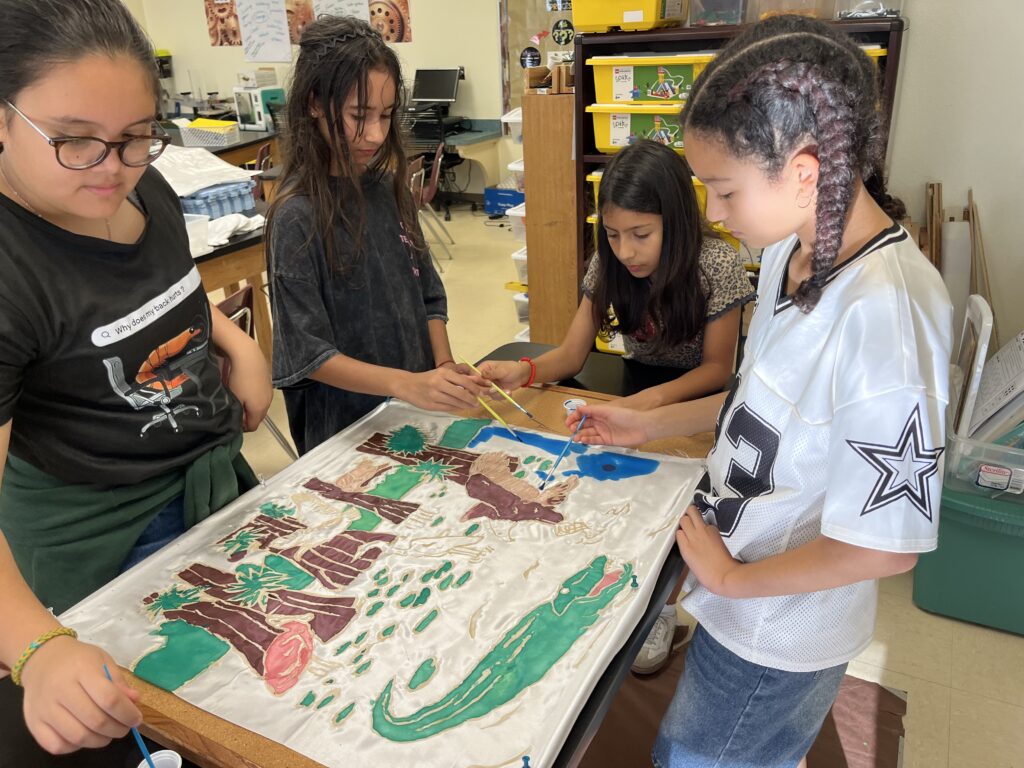
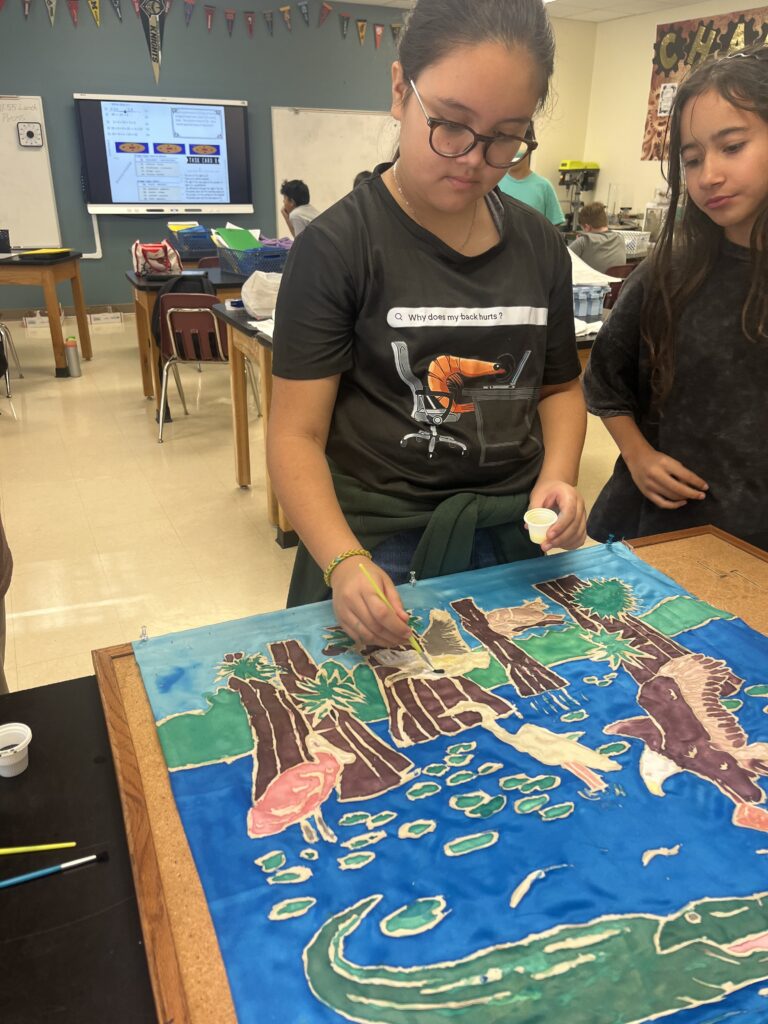
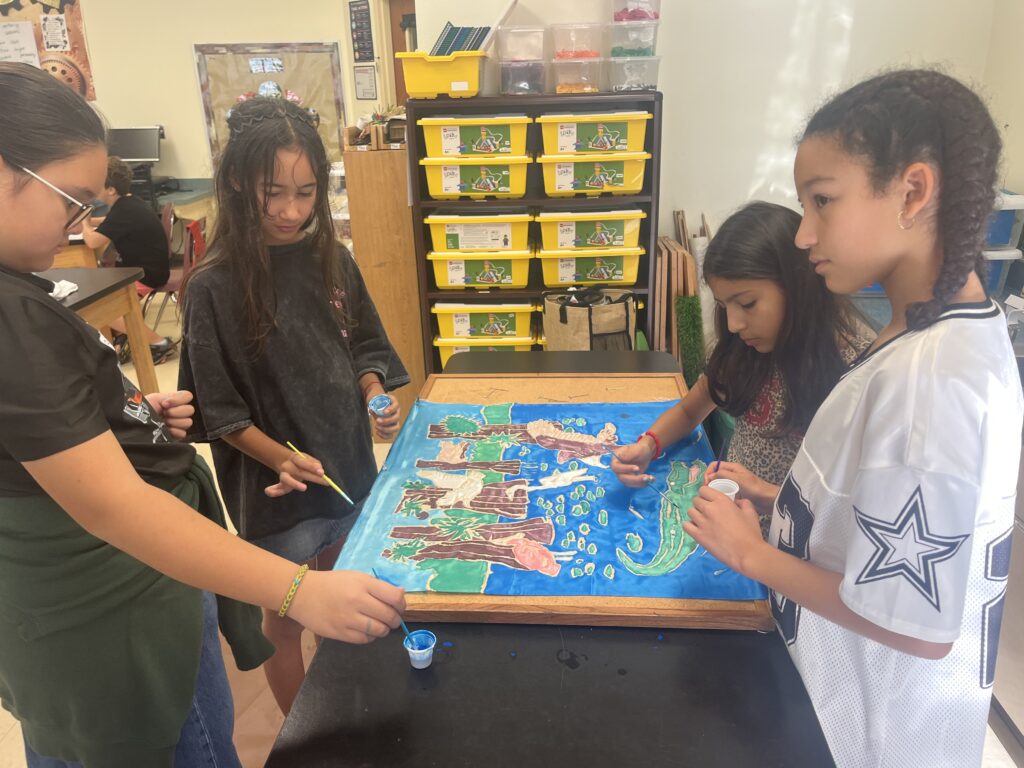
First, we used a primer called gesso, to outline an image inspired by the Everglades on a piece of satin using toothpicks. We had to make sure every object we outlined was a closed shape so that when we painted the paint would stay in the lines. The fine lines were hard but the Everglades aren’t perfect, so when we made a mistake, we encouraged each other by saying, “that’s pollution or that’s the damage being done to the Everglades”. After we finished outlining, we waited for it to dry, (for 24 hours) we used some paint brushes and silk paint to fully paint the satin inside the lines made by the gesso. Next, we soaked the satin to take out the gesso. It took about 10 minutes for it to dissolve in the water. After it dried, we used a marker to give definition to the eyes on the animals. Lastly, we used a stick to hang it up.
Sources:
https://www.fisheries.noaa.gov/national/habitat-conservation/protecting-coastal-blue-carbon-through-habitat-conservation & https://www.climate.gov/news-features/understanding-climate/understanding-blue-carbon
https://www.epa.gov/sites/default/files/2016-02/documents/functionsvaluesofwetlands.pdf & https://www.usgs.gov/faqs/why-are-wetlands-important
https://www.law.cornell.edu/cfr/text/33/385.8 & https://www.ebsco.com/research-starters/environmental-sciences/comprehensive-everglades-restoration-plan
https://environment.fiu.edu/where-we-work/everglades/ & https://www.floridamuseum.ufl.edu/earth-systems/blog/video-nutrient-pollution-and-eutrophication-in-florida-waterways/
https://www.epa.gov/cwa-404/overview-clean-water-act-section-404 & https://www.epa.gov/cwa-404/permit-program-under-cwa-section-404
https://www.nps.gov/ever/learn/nature/alligator.htm & https://floridaseminoletourism.com/biodiversity-in-the-florida-everglades/
https://www.lsuagcenter.com/~/media/system/e/3/a/d/e3ad27560d4fd0175e501436b2137b21/florida.pdf
https://www.skillshare.com/en/blog/silk-painting-a-beginners-guide-and-tutorial/?srsltid=AfmBOorg1Y0pWRccF2suJRp1T6kuL2LnH2nTVq_yqBWHh-Ht8cWaeUc4
This is a great report! I didn’t know that the Everglades help with storm and flood protection (acting like a sponge)! Another thing people can do to help is to tell our government to keep federal protections for clean water. Our government recently cut protections for the Clean Water Act which makes it easier for companies to pollute the water and damage the Everglades.
Amazing work HCES Team! You make us all proud. Way to go Glade-iators!