Breakfast-inator 3000
Event Location: Orange County STEM Saturday
Competition: Energy Transfer Machine
Division: 3-5
School: Bay Meadows Elementary
Team Name: Kinetic Geniuses
Project Name: Breakfast-inator 3000
Team Size: 3
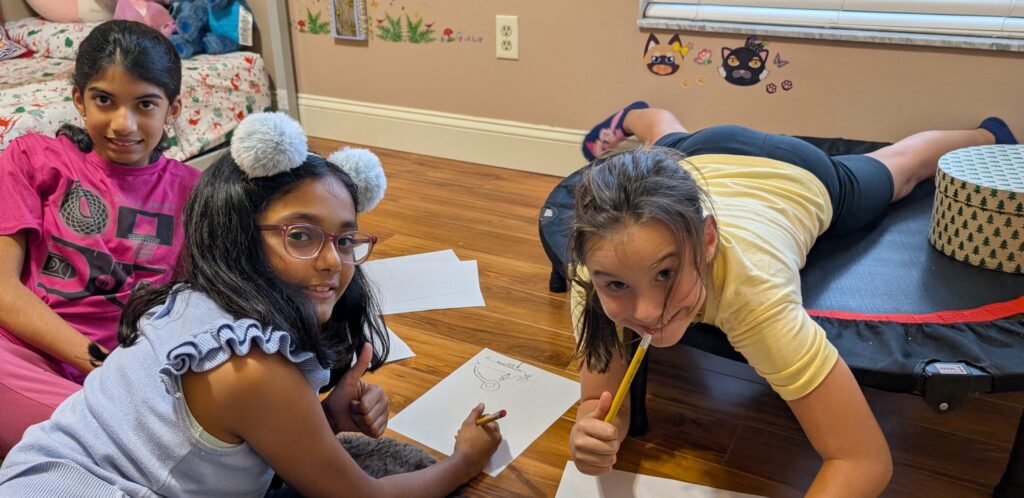
Team members: Ahana V. (5th grade), Aliza K. (5th grade), Emma N. (5th grade)
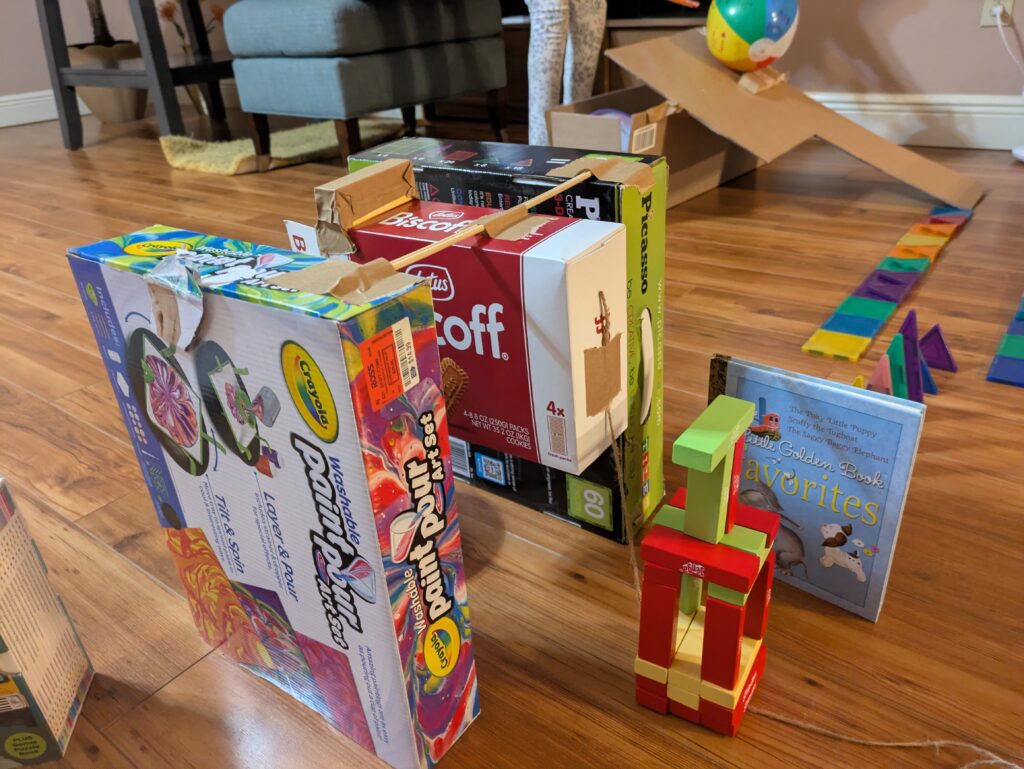
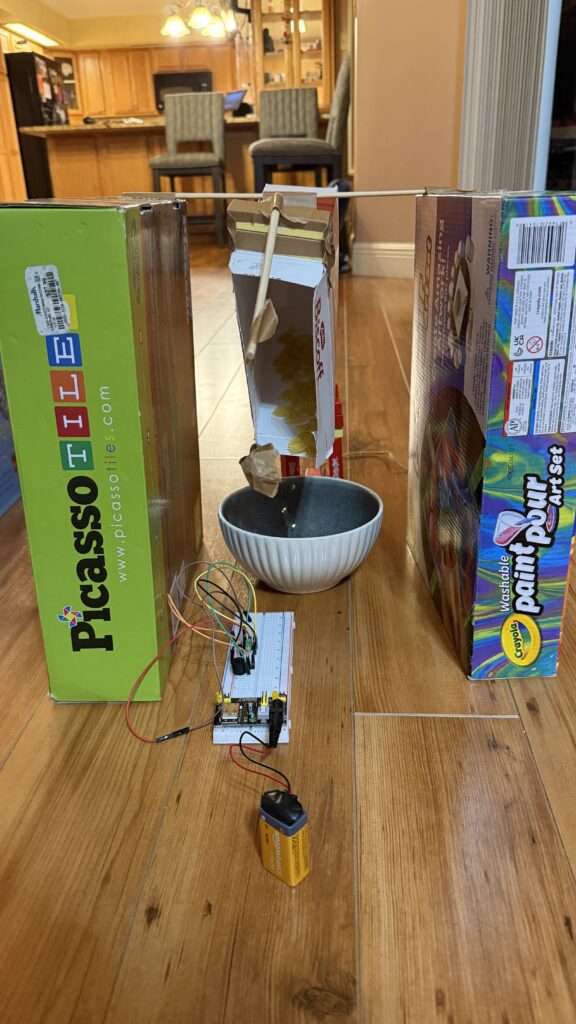
The final objective of the “Breakfast-inator 3000” machine is to serve cereal into a bowl through a complex chain reaction of energy transfers. Upon successful completion of the sequence, a light and a buzzer are activated to signal that breakfast is ready. This final signaling mechanism was implemented using a breadboard powered by a 9V battery and a reed switch, which was activated by a magnet to turn on the light and buzzer.
Steps and Energy Transfers Used in Breakfast-inator 3000 Machine:
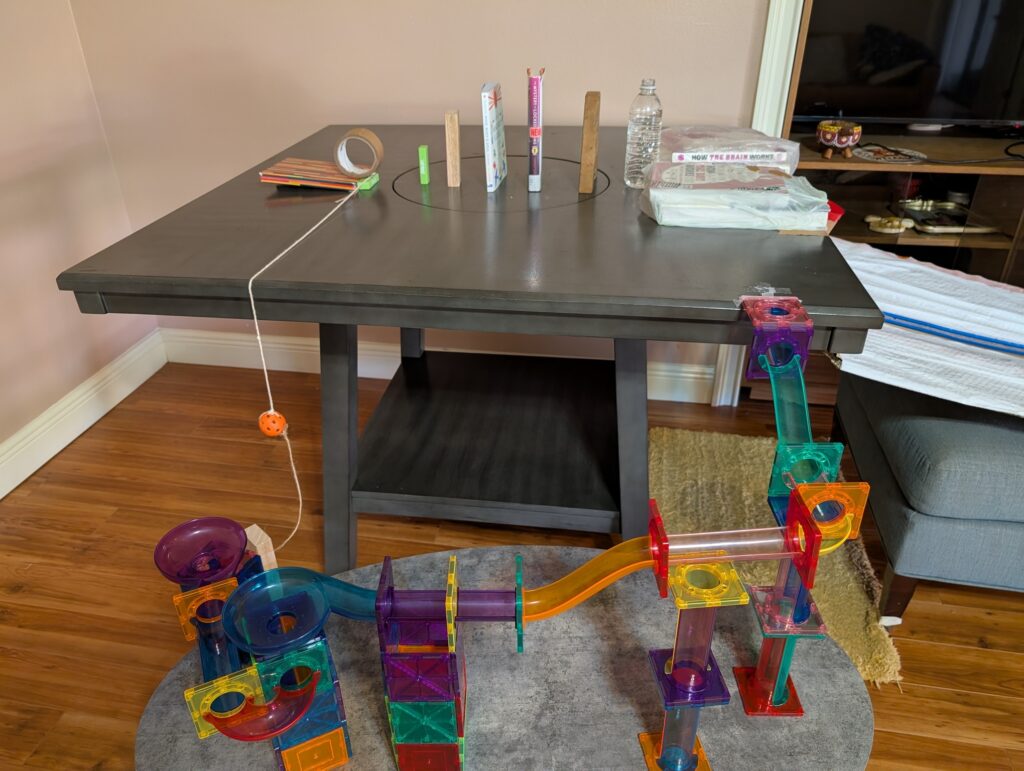
Step 1: A ball rolls down the marble run: Gravitational potential → Kinetic energy.
Step 2: The falling block pulls the second block: Kinetic → Kinetic energy.
Step 3: The falling block pulls the second block: Kinetic → Kinetic energy.
Step 4: A tape roll is released, triggering a series of dominoes (blocks and books) that tip a water bottle: Potential → Kinetic → Kinetic energy.
Step 5: Water pours into the ice cup, causing the ice to melt: Kinetic → Thermal energy.
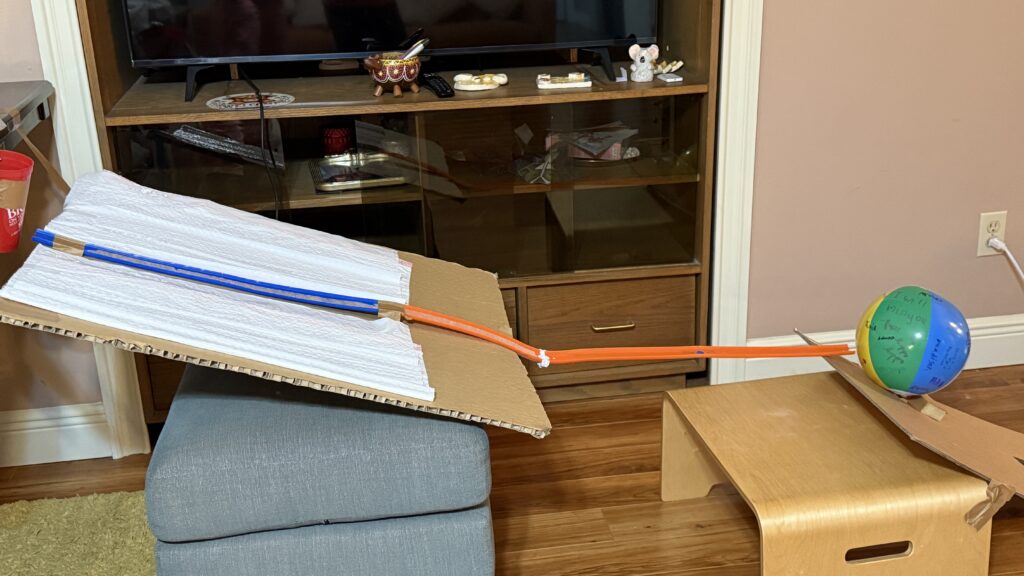
Step 6: The melting ice releases a car: Thermal + Gravitational Potential → Kinetic energy.
Step 7: The car rolls down the ramp and hits a ball: Kinetic → Kinetic energy.
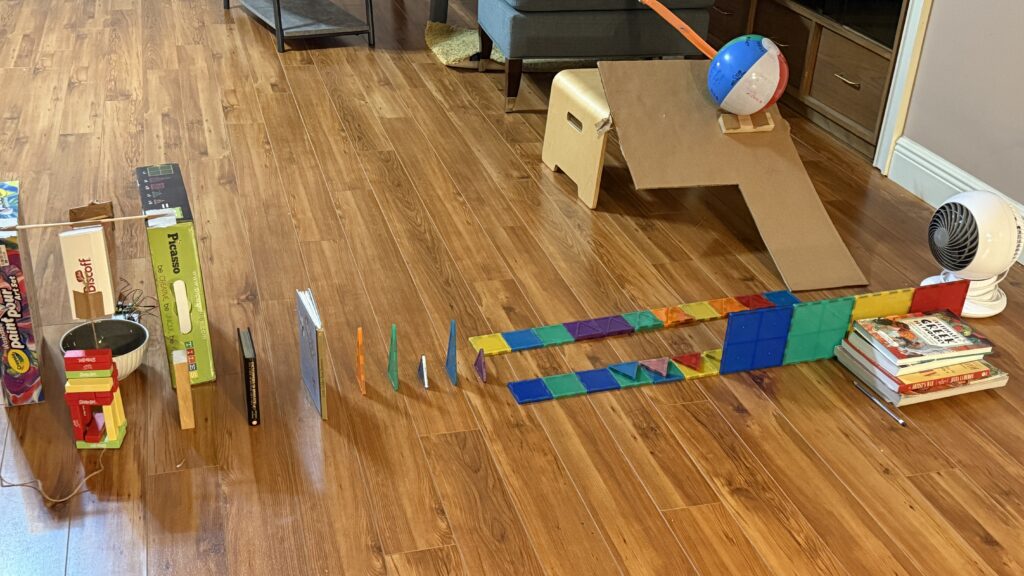
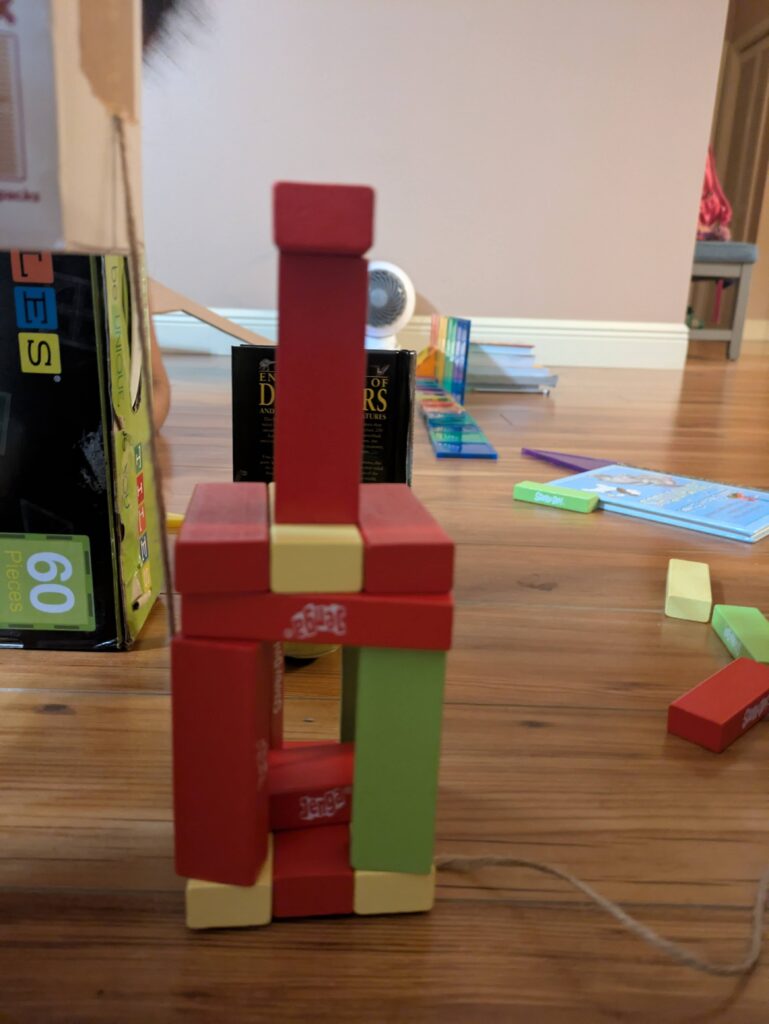
Step 8: Wind energy (from a fan) pushes the ball, triggering magnetic tiles, books, and a block, which causes the Jenga tower to fall: Wind power → Kinetic energy.
Step 9: Cereal falls into the bowl: Gravitational Potential → Kinetic energy.
Step 10: A magnet comes near the reed switch, completing the electrical circuit: Magnetic → Electrical energy.
Step 11: The electrical circuit activates the light and buzzer: Electrical → Light + Sound energy.
Materials: Marble run, Wooden blocks, Ropes, Thread, Domino blocks, Jenga blocks, Notebooks, Books, Tapes, Tape roll, Water bottle, Water, Ice, Water Cup, Toy car, Toy car ramp, Cardboards, Ball, Fan, Magnetic tiles, Boxes, Cereal, Cereal boxes, Chopsticks, Bowl, Tables, Breadboard with power connector, Magnet, 9v battery power, Connector wires, Buzzer, Led light, Reed switch and other support materials.
Challenges we encountered while designing and building Breakfast-inator 3000 machine:
“Test our ideas by adjusting height, weight, size, speed, materials to make it work was challenging. At the end we started having fun.” – Ahana V.
“Thinking of different energy transfers, testing each of them and making them work together perfectly.” – Aliza K.
“Setting up again for the next test after each failed attempt was challenging. Also getting the right amount of ice to ensure it melt.” – Emma N.
Websites and videos used for ideas:
Build your own Rube Goldberg machine: https://www.connectionsacademy.com/support/resources/article/build-your-own-rube-goldberg-machine/
Energy Transfer Machines: https://www.youtube.com/watch?v=r8d1g_YCrE4
Build a simple Rube Goldberg: https://inventorsoftomorrow.com/2021/02/23/build-a-simple-rube-goldberg/
Kinetic Energy Transfer: Rube Goldberg Machines: https://www.youtube.com/watch?v=hrMgaHYEE-w