
Photon Force 5
Event Location: Orange County STEM Saturday
Competition: Junior Solar Sprint
Division: 4-6 (JSS Green)
School: Deerwood Elementary
Team Name: Photon Force 5
Project Name: Photon Force 5 Solar Car
Team Size: 5
Photon Force 5
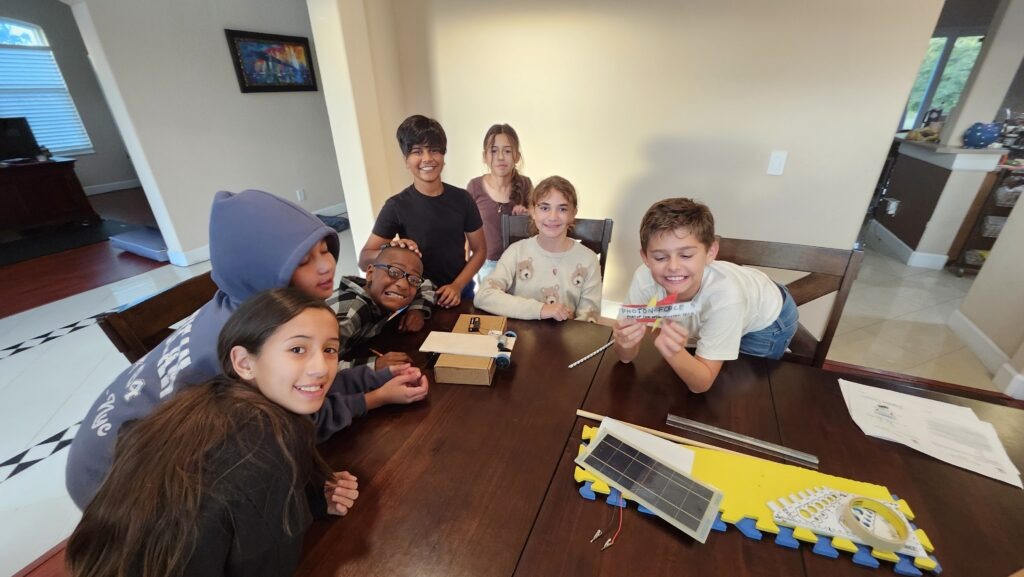
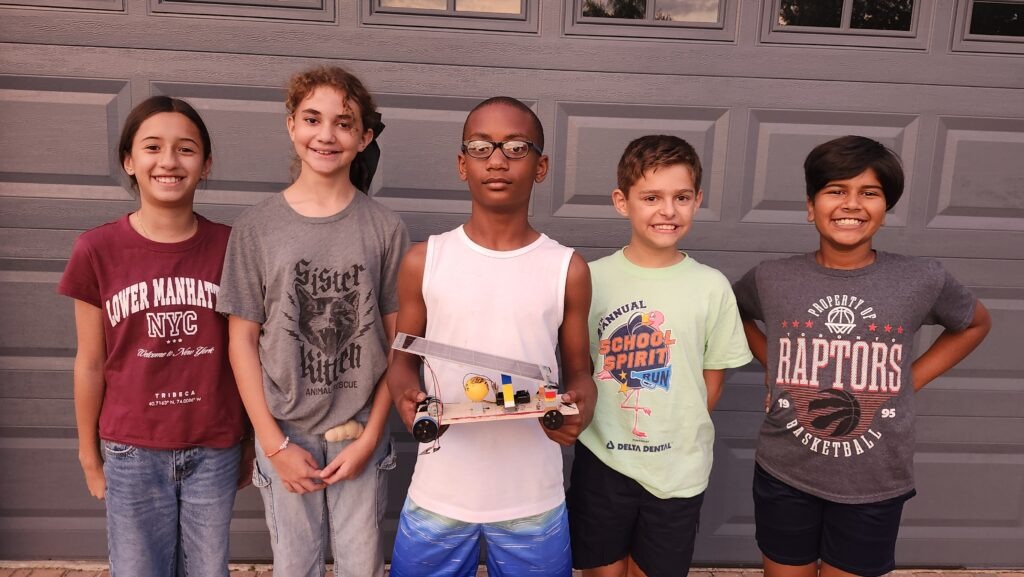
We are Photon Force 5 from Deerwood Elementary. We are all in 5th Grade. Our team captain is Greyson. Other team members are Juliana, Margaux, Malachi, and Jack.

Build Process and Experience – Creating Prototype 1
Prototype 1 – Meetings 1 through 4: The creation of our first prototype.
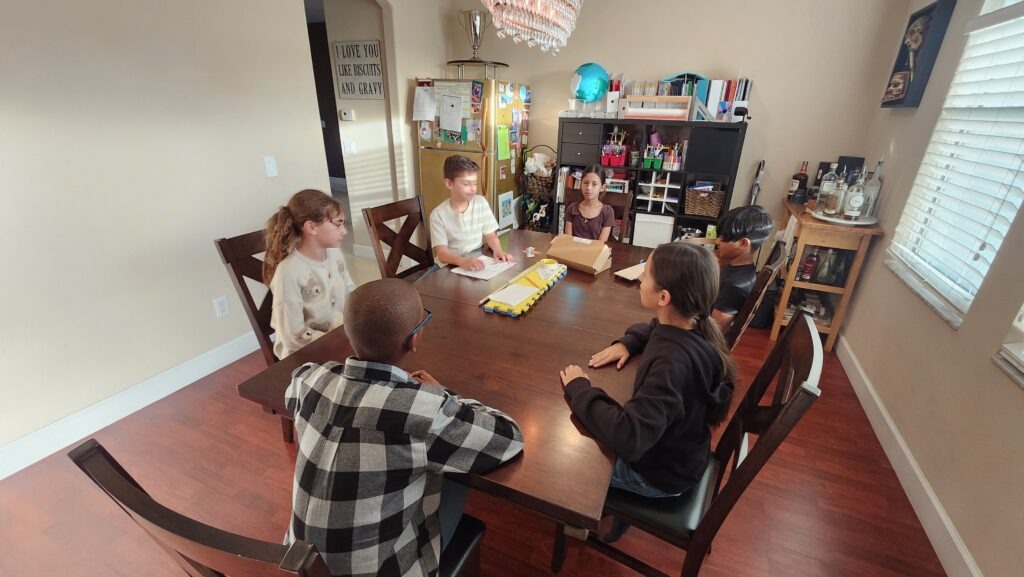
Meeting 1 (1 hour) – November 2, 2025.
Team Members present were Greyson, Juliana, and Jack.
Team members voted on Team name – PHOTON FORCE 5 and reviewed competition rubric and noted important dates:
Nov. 24th 5pm website and car build should be complete
Dec. 6th Super STEM Saturday
We also discussed our team goal: build a fast, aerodynamic, light weight car that collects and converts solar energy into electrical energy that is transferred to the motor which converts the electrical energy into mechanical energy which moves the car forward using the gears (pinion and spur).
We also discussed what factors might affect the car’s overall preformance such as: weight, aerodynmanics/wind resistance, harnessing more light energy, gear ratios, chassis design, and payload/passenger.
The passenger needed to be secure during the race but easily removable at other times. We also required an alternative battery energy source in case of bad weather.
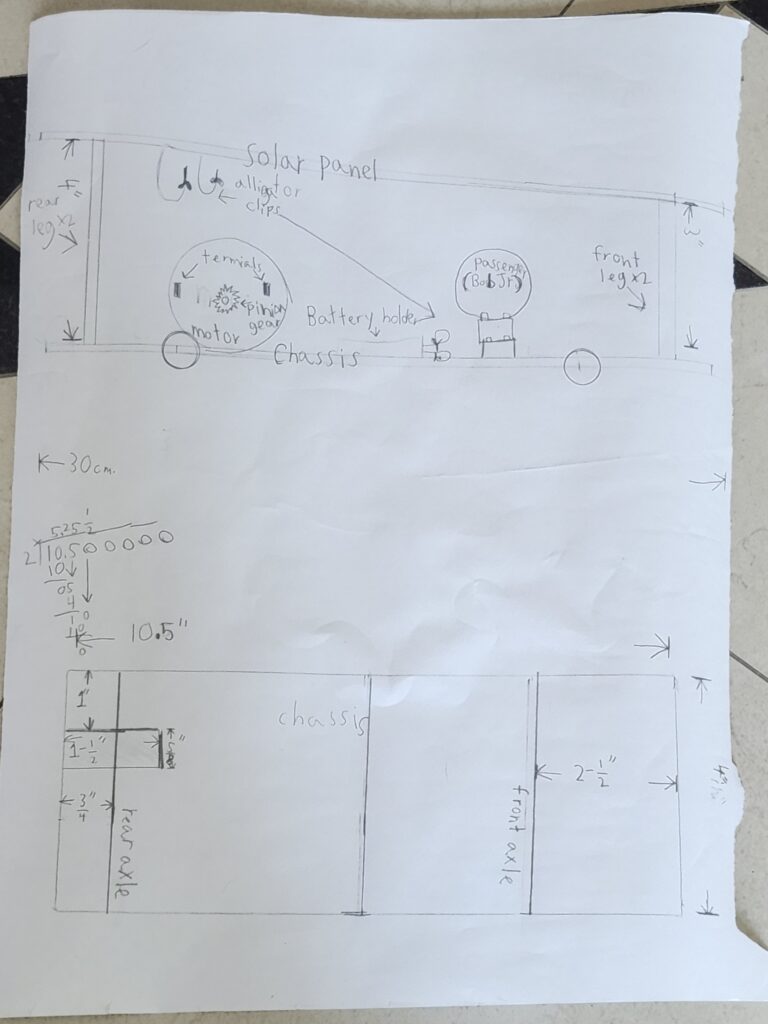
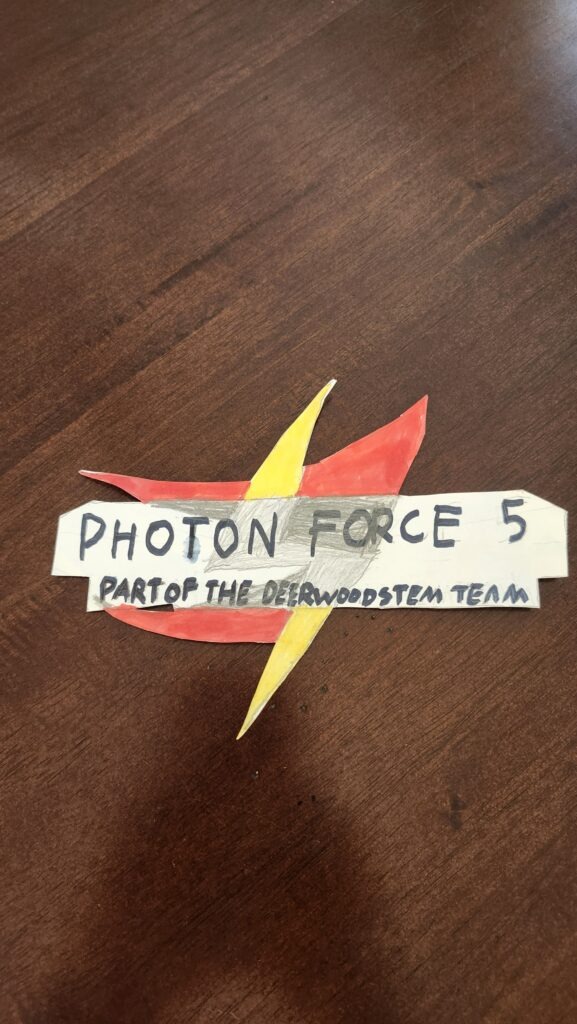
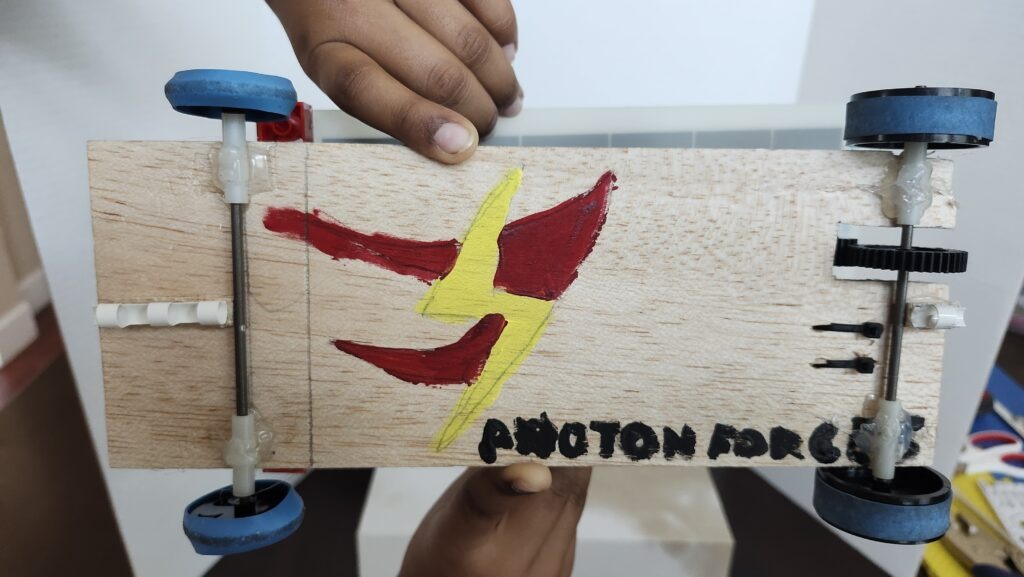
Our team presented ideas on the chassis design that would have legs to support the solar panel above the chassis. We decided that the front legs should be slightly shorter than the rear to allow for a slight angle of the panel. We also agreed that Jack would design our team logo and paint on base of chassis, leaving a 3cm2 space for a rally number.
Meeting 2 (1.5 hours) – November 6, 2025.
Members Present Greyson S, Juliana B, Jack L, Malachi B; Absent – Margaux C
A new team member (Malachi) caught up about rubric, idea for design, and factors that could affect the performance in a positive or negative way.
We followed the solar car kit instructions for designing and mapping out chassis, including measurements to cut out gear space on the chassis and suggested axle position.
We attached wheels to axles with spacers and glued the spacers to the chassis. To make sure axles were placed parallel to each other we used a carpenter square. We placed the spur gear on the rear axle.
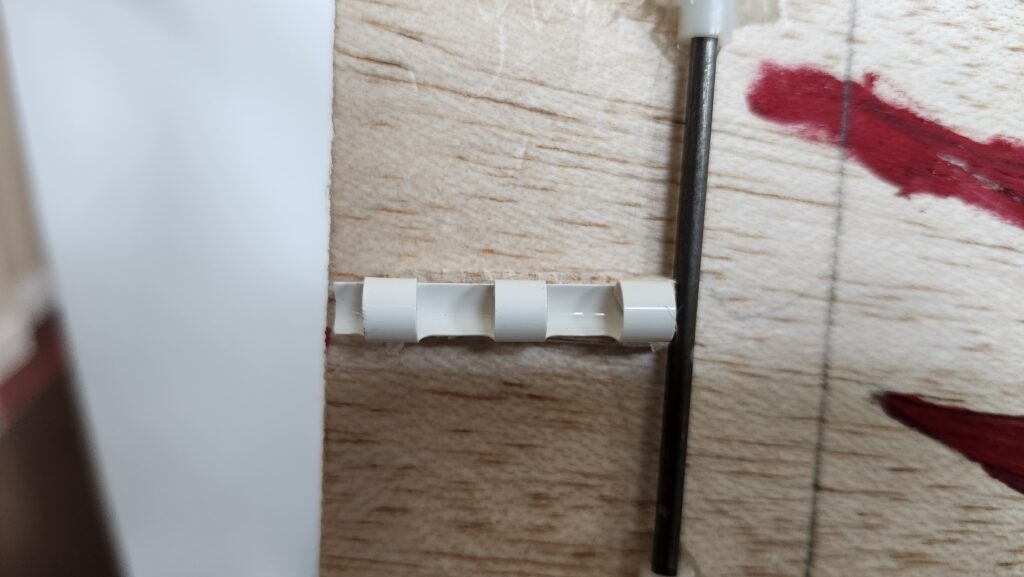
We discussed ideas for support legs that included Lego, corks, and wooden dowels. We decided to use wooden dowels and discussed eyelet solutions and decided on a book spine comb as suggested by the competition rubric.
We watched videos about gear ratios and then discussed in more detail. And then chose our combination from the various gears supplied in the solar car kit. Based on the videos we learned that the gear ratio is the ratio between the number of teeth in the spur and pinion gear. We chose a gear ratio of 40/10 = 4.
We learned that gear ratio is the relationship between torque (the amount of force need to make an object spin) and speed. We also talked about how the motor mounting accuracy was important for proper gear alignment which would definitely affect performance and that we would need help with soldering wires and clips.
Meeting 3 (1.5 hours) – November 11, 2025.
Members present Greyson S, Juliana B, Jack L, Malachi B, Margaux C
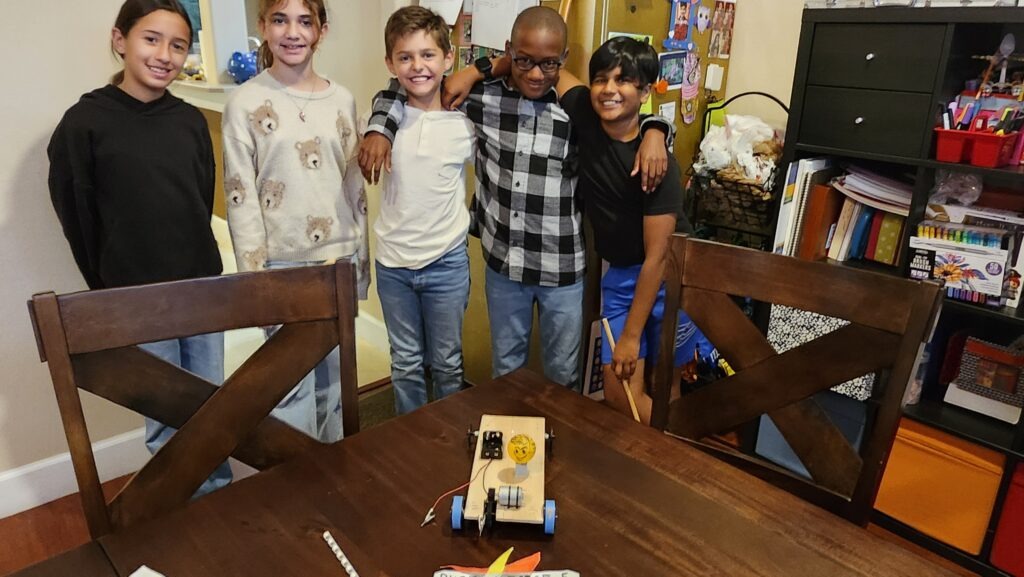
A new team member (Margaux) caught up on the teams goal, important dates, website need and concept of our car build. We had help with soldering of wires and clips and cutting the dowels.
Jack provided the book comb to be used as the eylets. When we were figuring out the placement of the eyelets on underside of the chassis we realized that we would need to clear the axles so we decided to use a piece of balsa wood to lower the eyelets to avoid them.
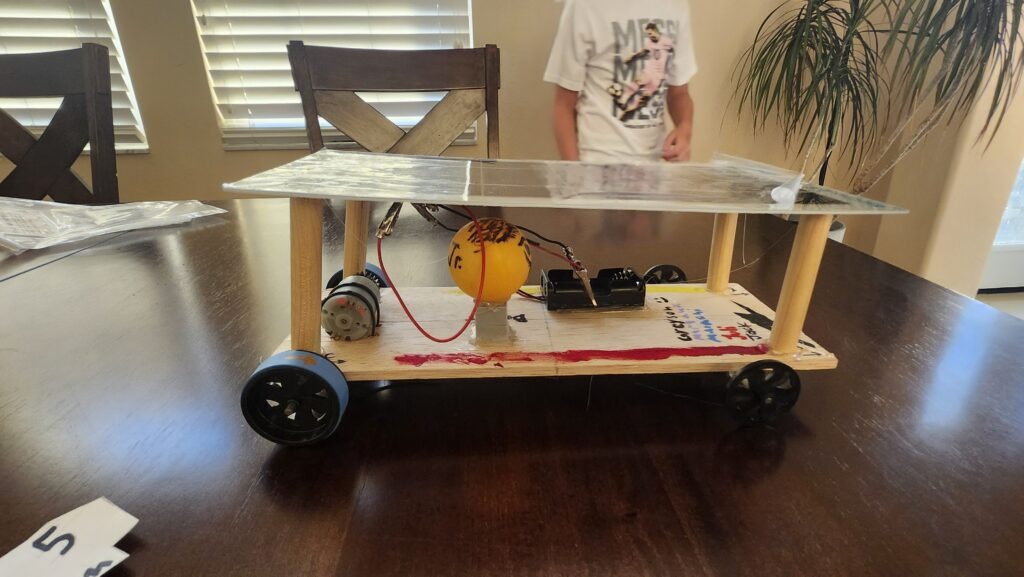
We talked about the passenger solution and came up with the idea to glue a Lego block to the chassis and then glue a second Lego block to a ping pong ball (Bob Jr.) to attach the passenger to the car.
We tested the motor with battery power and we learned that the wire color had to be connected to the correct motor terminal to make the motor spin in the direction that we wanted it to spin. We figured out that the pinion gear needed to spin backwards to make the car move forward.
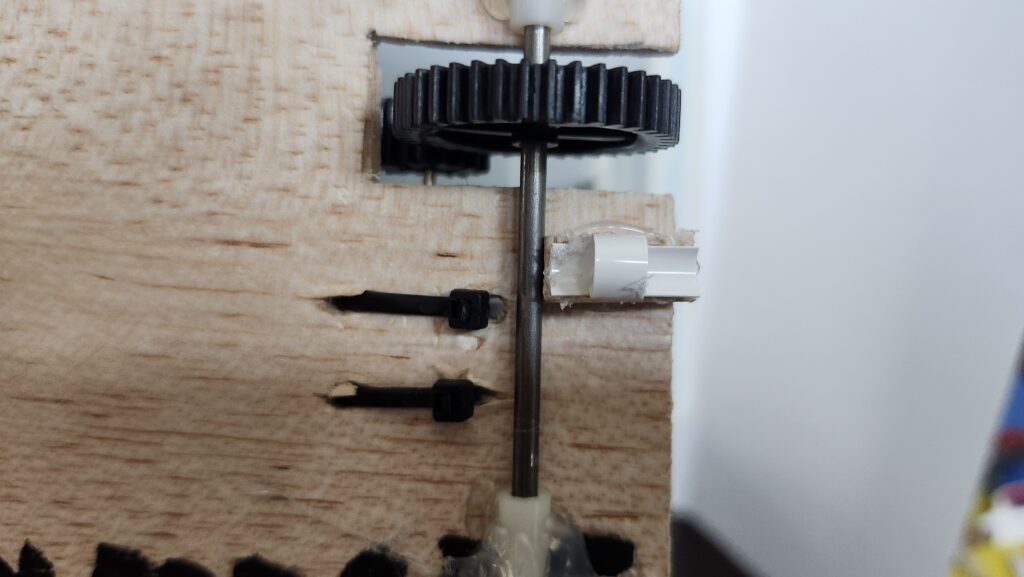
We placed the pinion gear on the motor axle and mounted the motor to the chassis with drilled holes for zip ties to hold the motor in place. We marked the motor terminals to make sure we know where to connect the correct colors on race day.
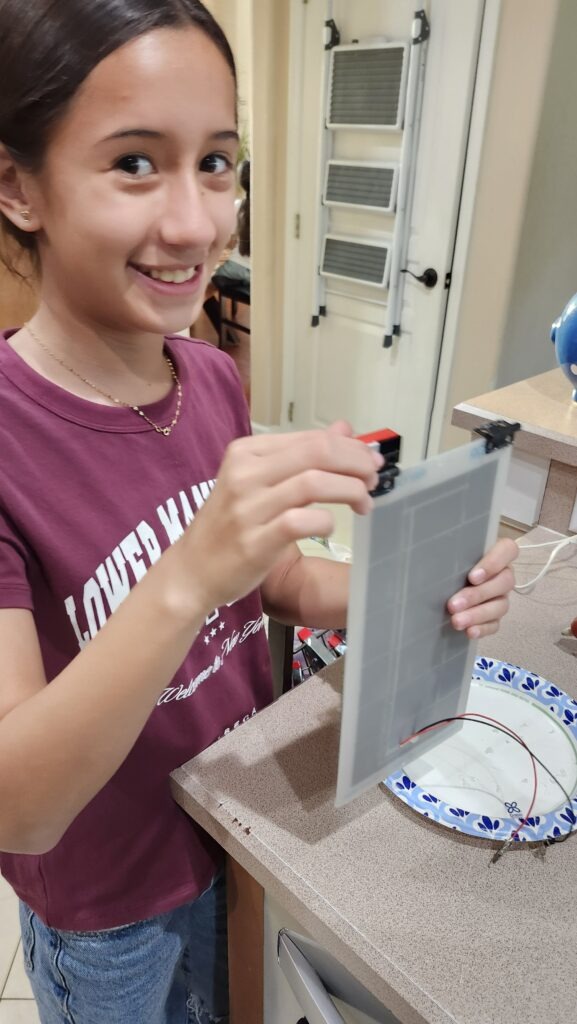
At 5:15 pm went outside to test the solar panel with the motor and noticed that the motor was not turning.
Meeting 4 (1.5 hours) – November 18, 2025.
Members present Greyson S, Juliana B, Jack L, Malachi B, Margaux C
We reviewed the website requirements and assessed the book spine comb placement. We added the wooden support dowels which created a fixed solar panel with a little bit of an angle because we wanted the car to have little wind resistance.
TEST attempt of Prototype #1:
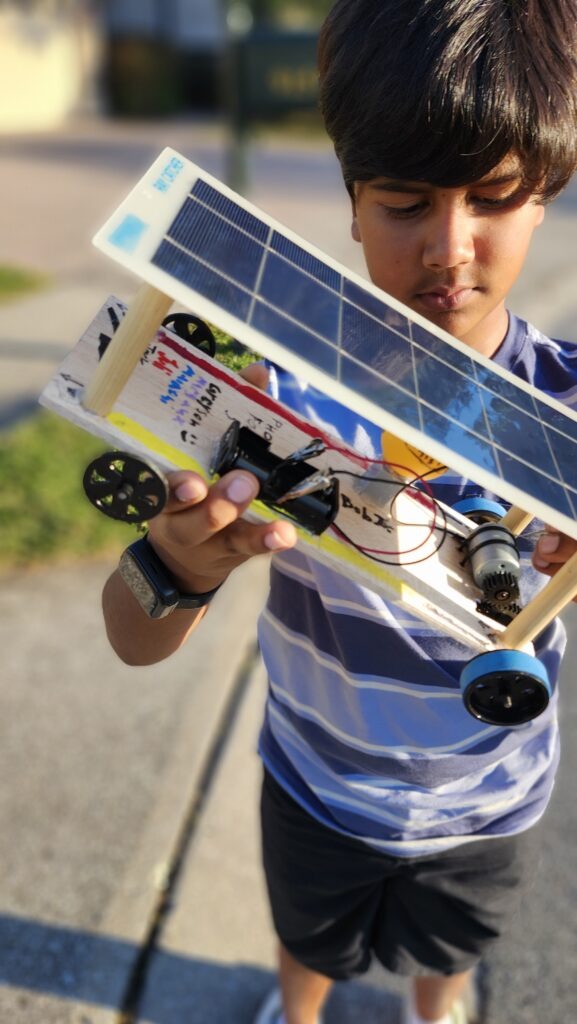
At 5:15pm went outside to test solar panel with motor and again, the motor did not turn. We talked about the reasons why we thought it was not working: incorrect wiring, not enough power from the pinion gear to turn the spur gear, not enough sunlight, angle of solar panel. We came up with a plan for a solution: Test the car at lunch time the next day in bright sunlight. We found out that this was the problem. We also noticed that the fixed angle of our panel, although aerodynamic, was an issue in collecting solar energy.
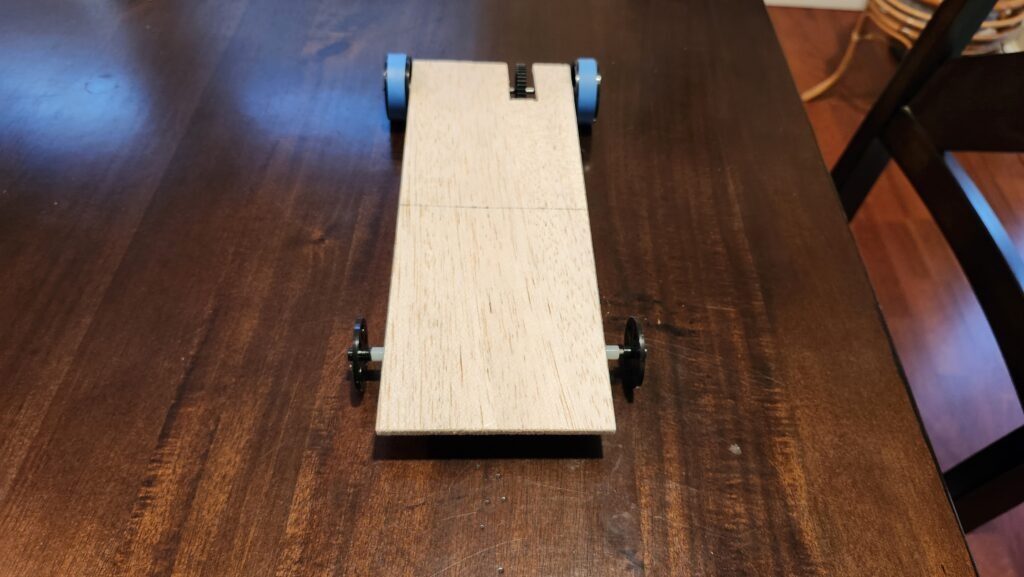
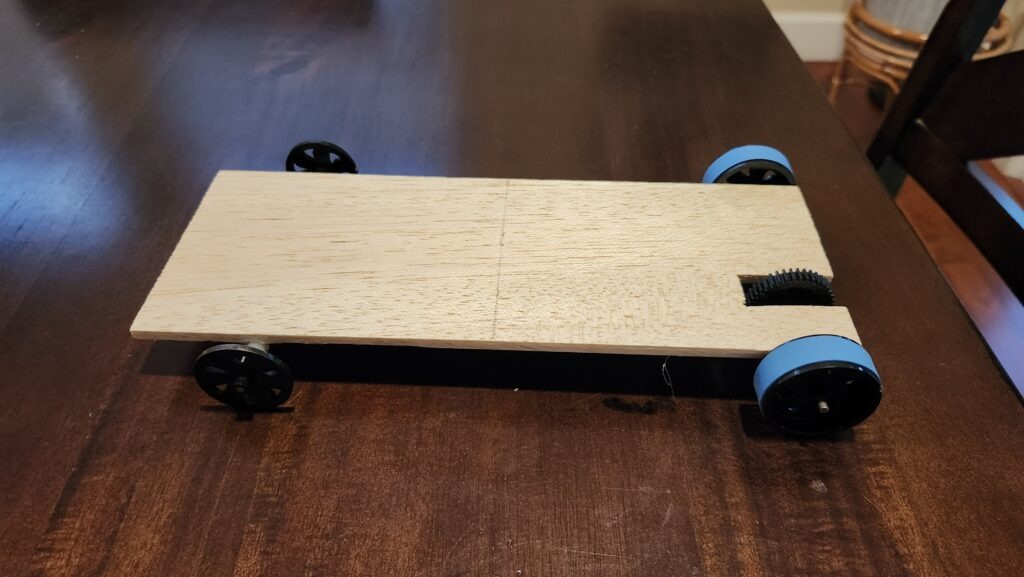
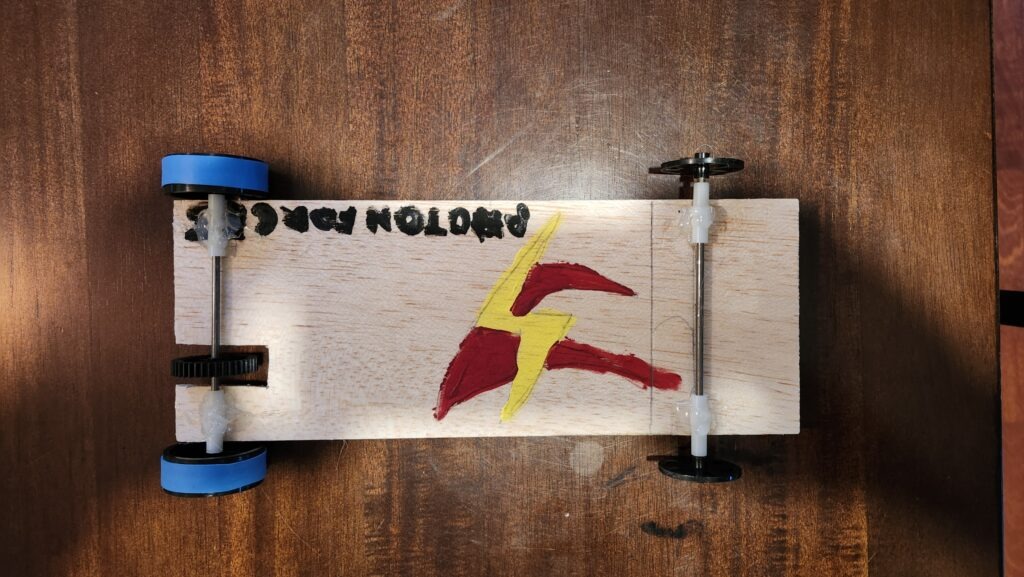
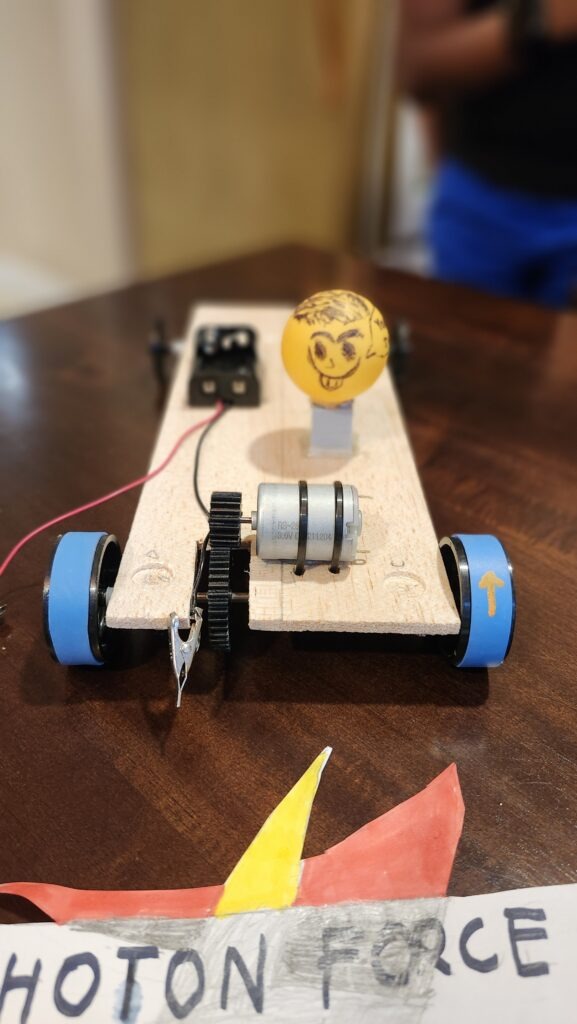
Build Process and Experience – Testing Prototype 1
Meeting 5: The testing of Prototype 1 and brainstorming and development of our second prototype.
Meeting 5 (30 minutes) – November 20, 2025.
Meeting at school pavilion at lunch time with permission from Science Teacher Mrs. GM to test car at peak sunlight time (noon).
Members present: Greyson, Margaux, Juliana, and Jack (Malachi was unavailable due to class).
We connected the wires correctly and positioned the panel towards sun which resulted in a forward motion. When we placed the car in the opposite direction it did not move forward motion, so we concluded that the panel direction and angle were important in determining how much energy was collected.
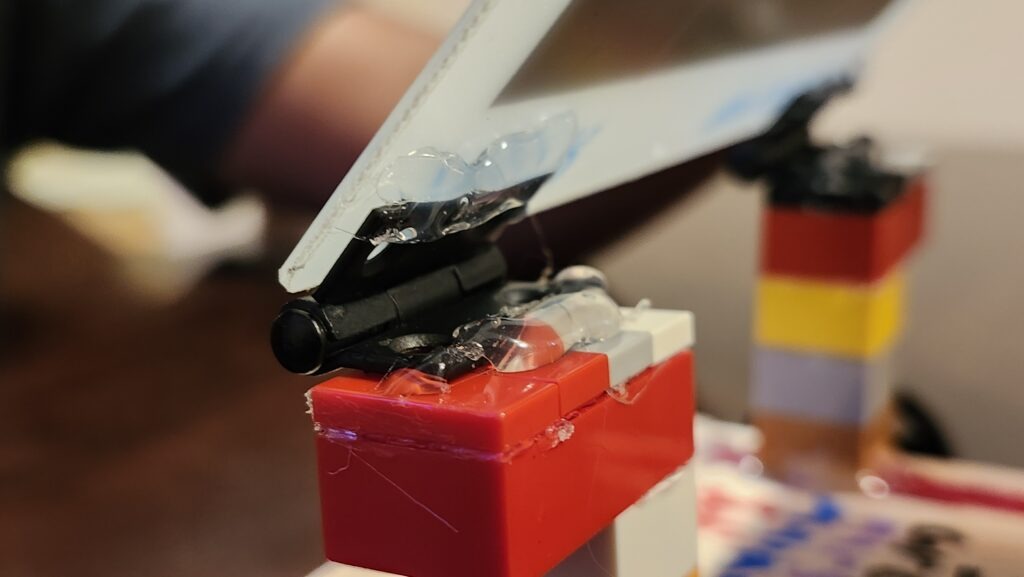
We decided to increase the angle of the panel by shortening the front support columns to increase the angle of the panel. We then had the idea of using hinges so that we could change the angle of the panel if we needed to, depending of the time of day: at the peak sunlight (noon) the panel could be at a lower angle OR later in day (5:00 pm) at low sunlight, we could increase the angle to collet more sunlight.
Build Process and Experience – Prototypes 2 and 3
Meeting 6 (1.5 hours) – November 21, 2025
Members present: Greyson, Juliana, Jack, Malachi, Margaux
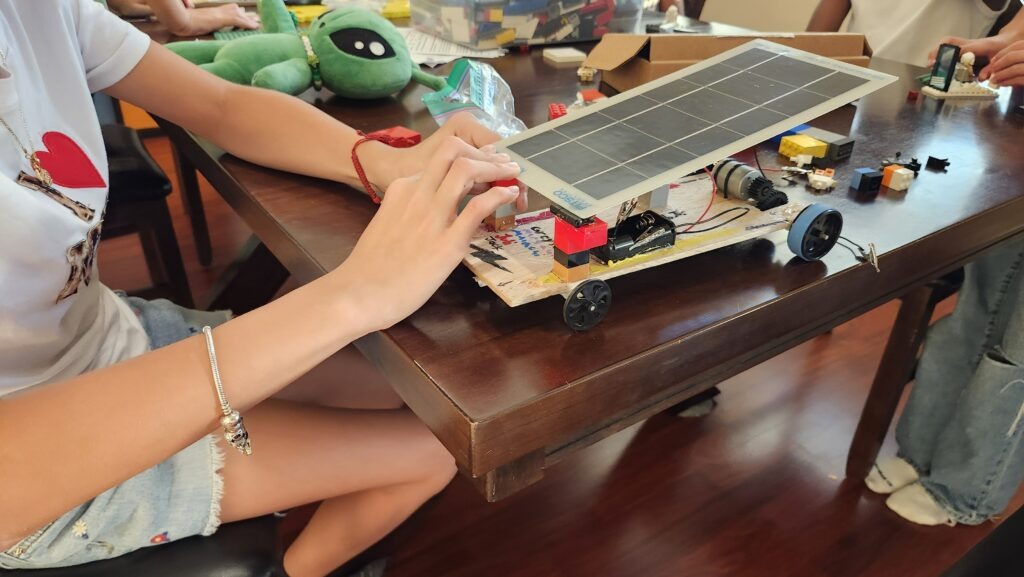
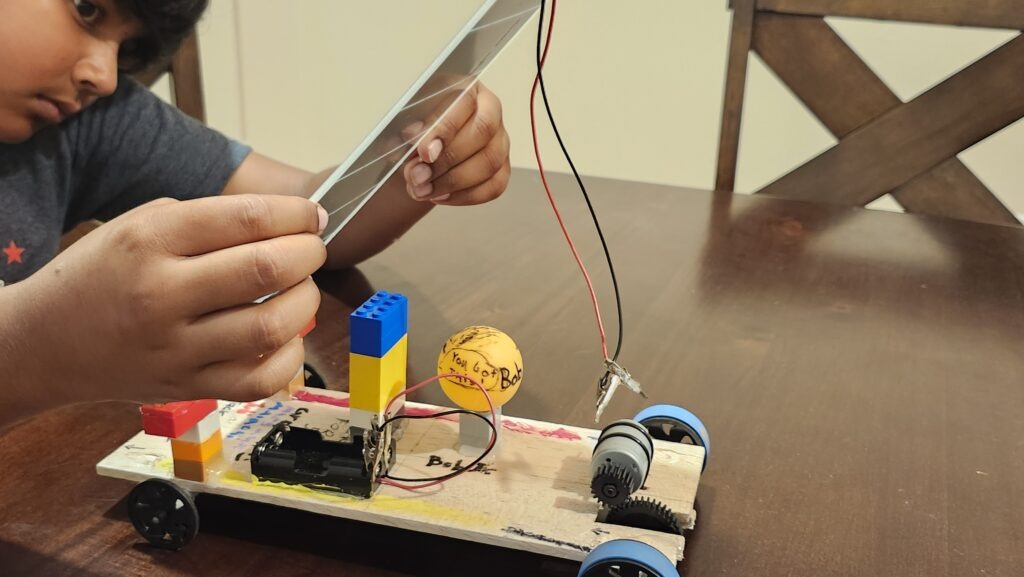
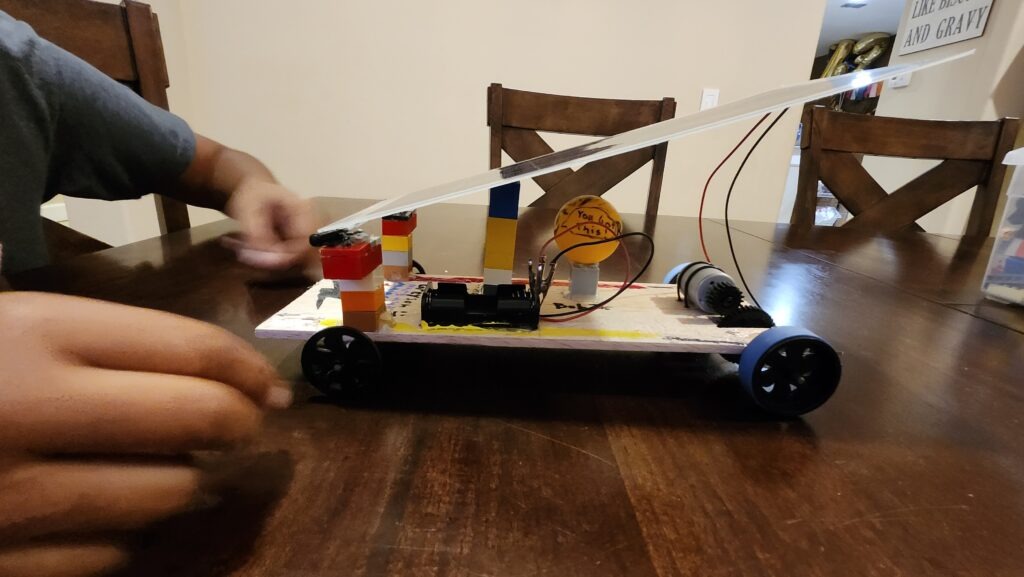
We decided to use the hinges to change the angle of the panel by attaching them to Lego blocks which were then glued to the chassis. The wood support legs were removed and replaced with Lego blocks. We decided to use Lego because it let us change the heights of the support column to change the angle of the panel (more blocks = more angle, less blocks = less angle). We tested again at 5:15 pm and because we increased the angle of panel we got forward motion.
Each team member also did a write up of what we did to help create the project website.
We also realized that our passenger might be provided by the race committee at Super STEM Saturday and that the passenger we made (Bob Jr.) may not be able to be used, so we created a secure seat for the ball to sit in.
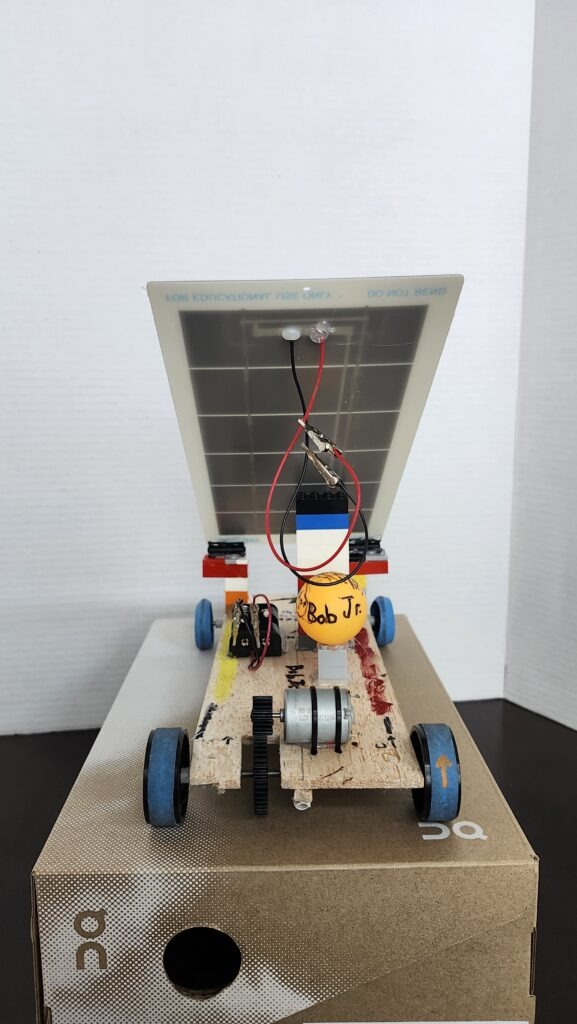
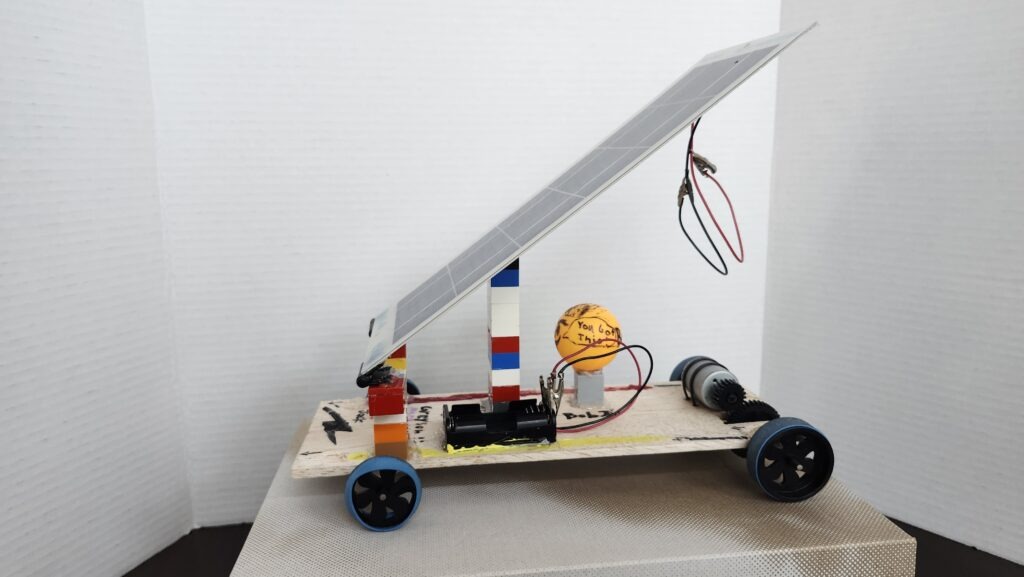
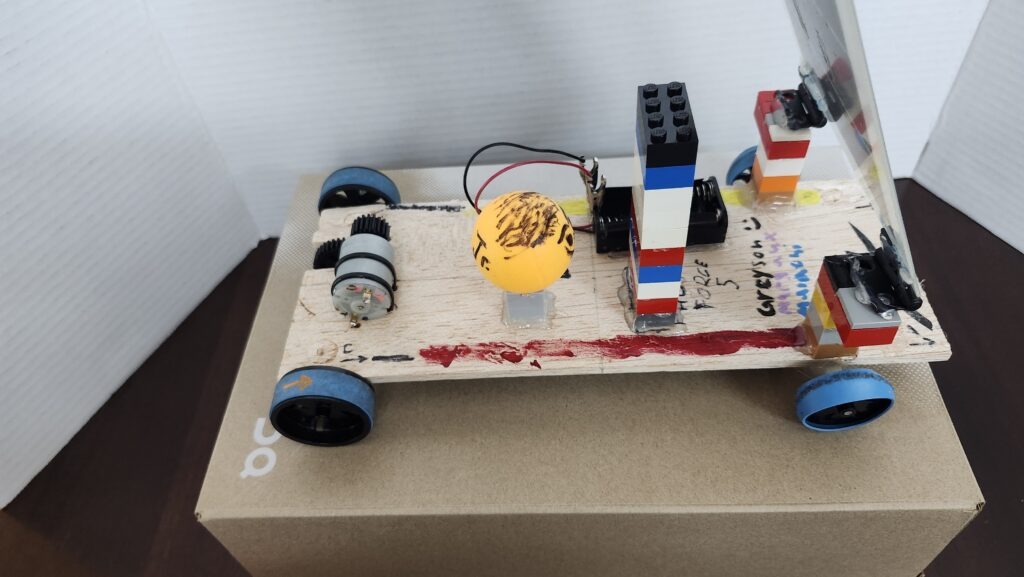
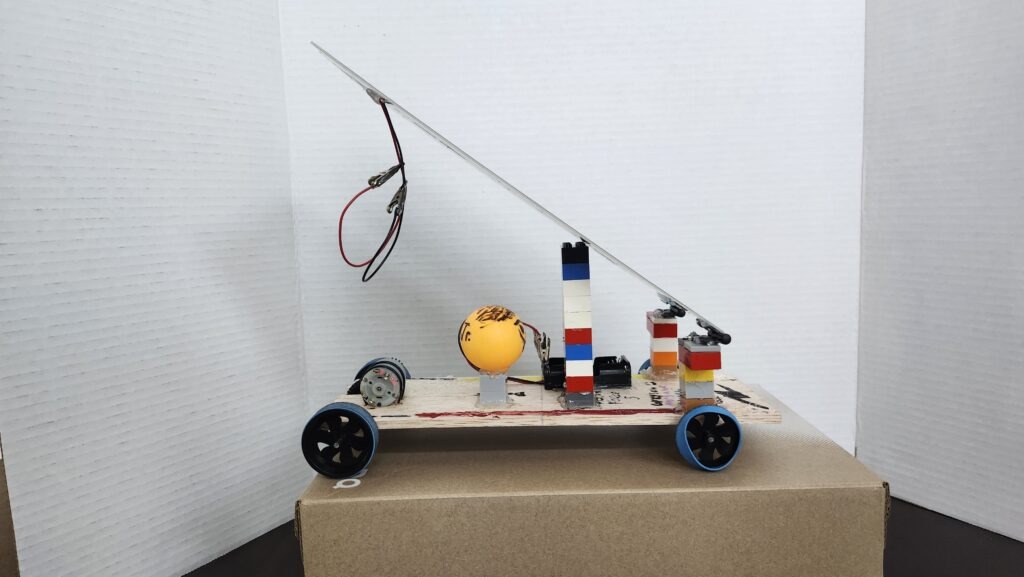
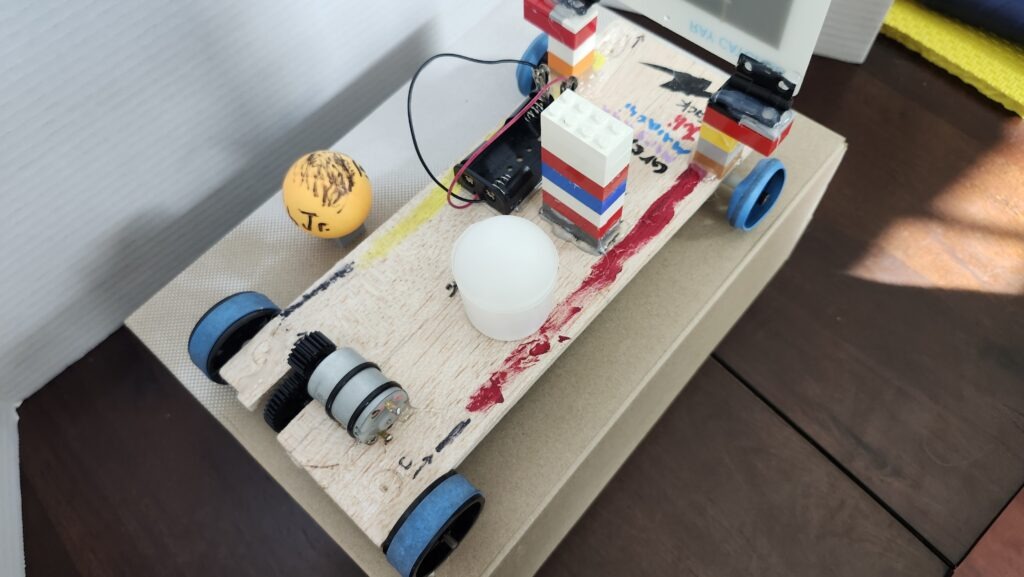
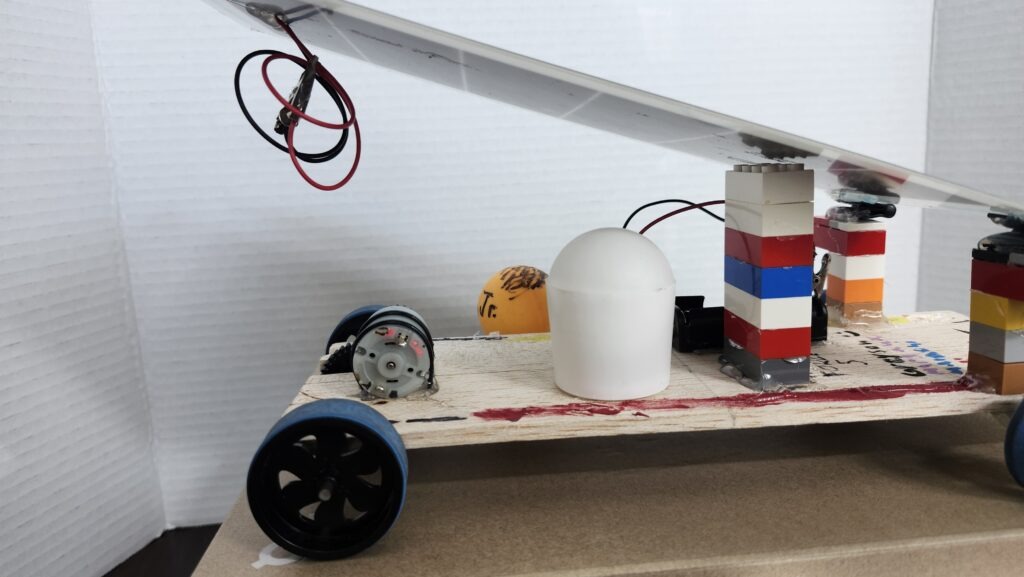
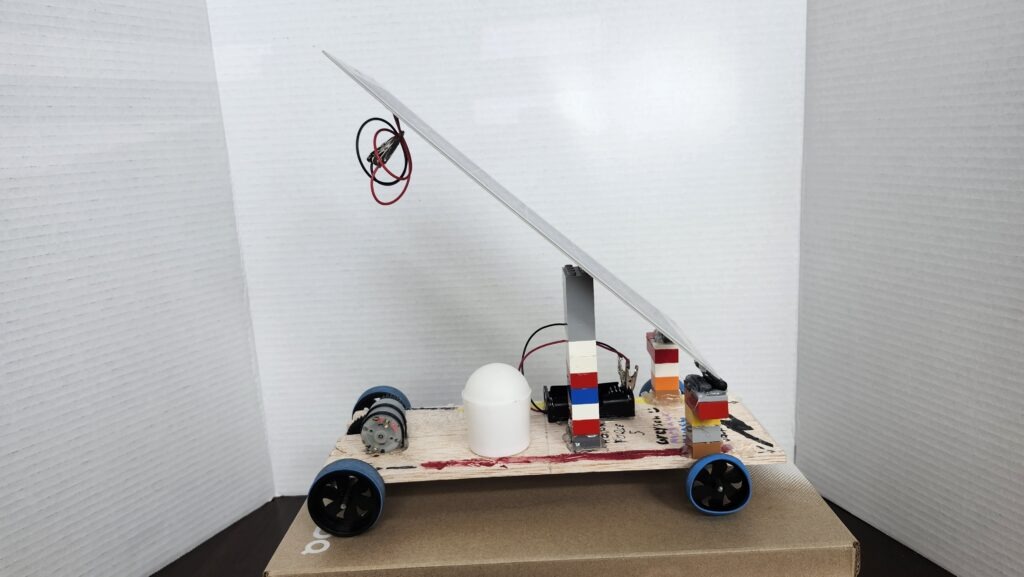
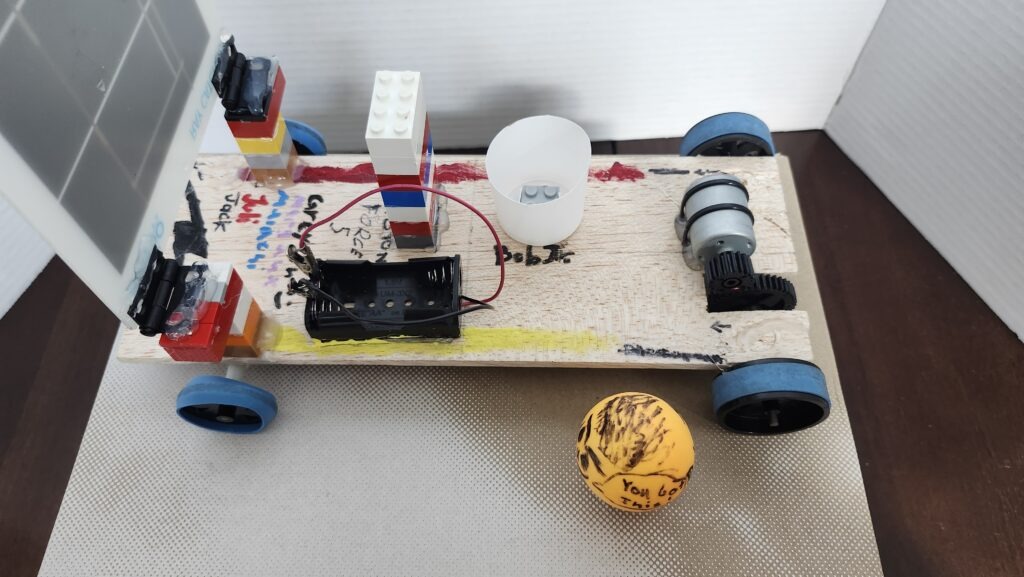
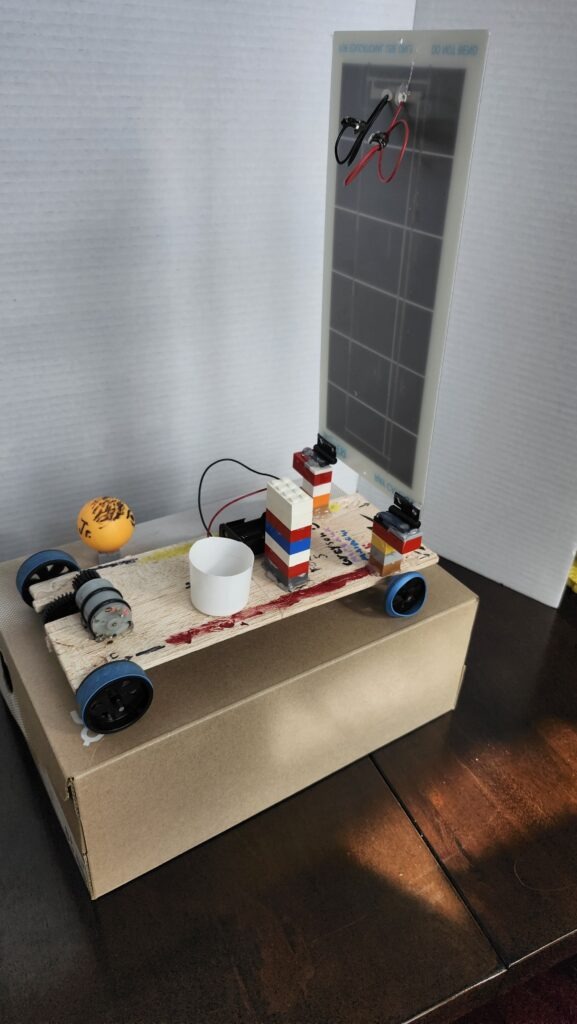
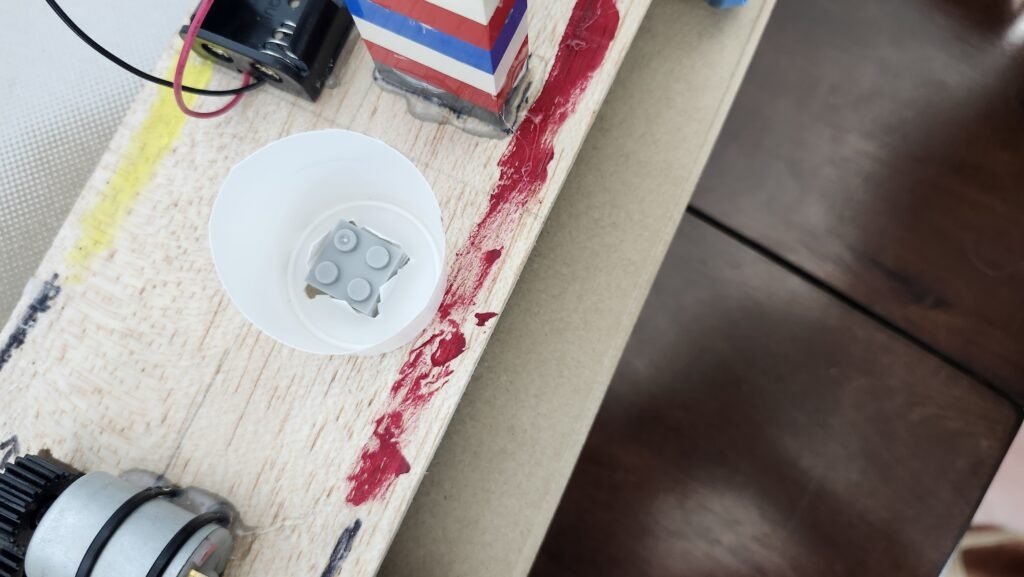
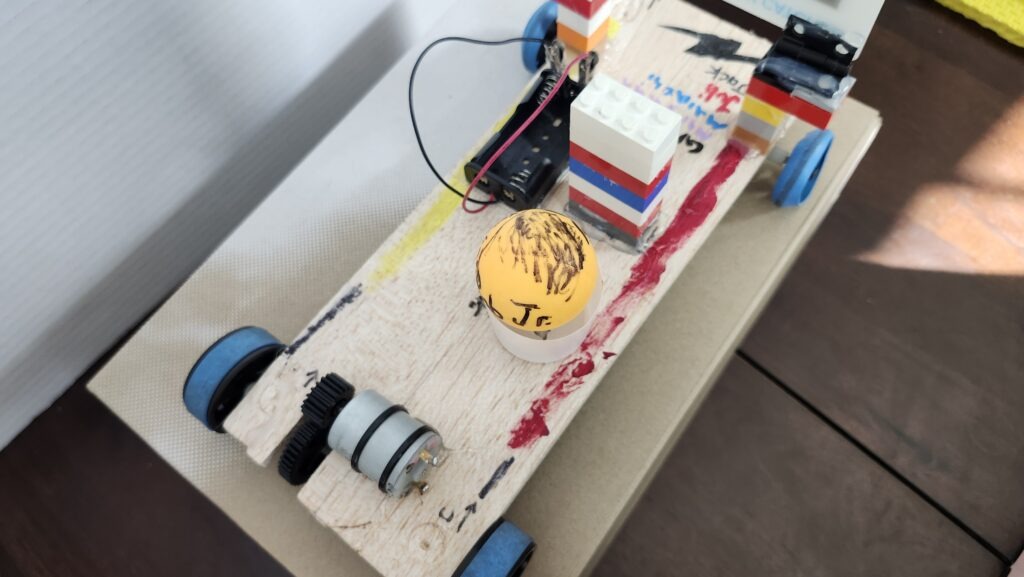
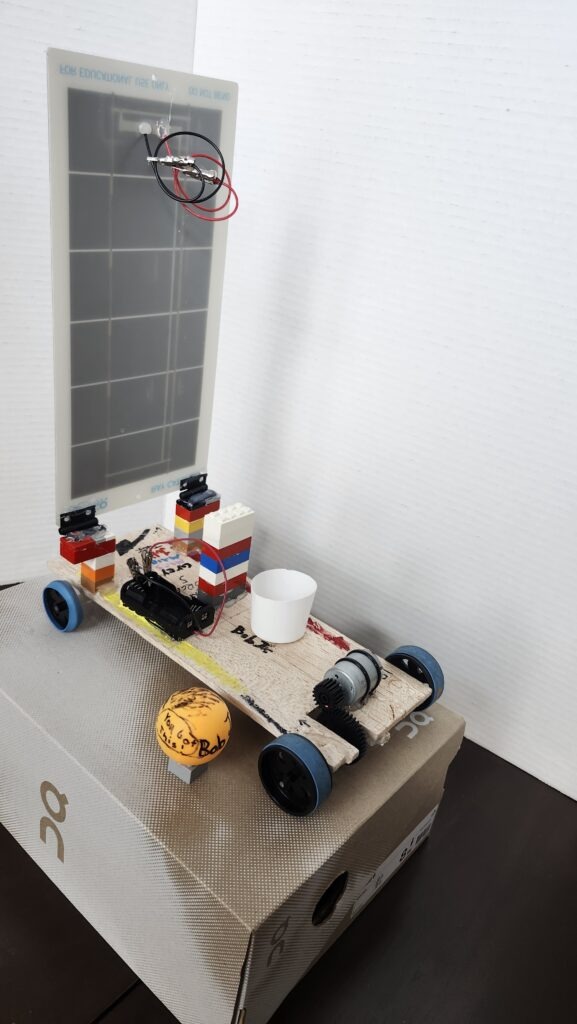
Photon Force 5 – Final Design
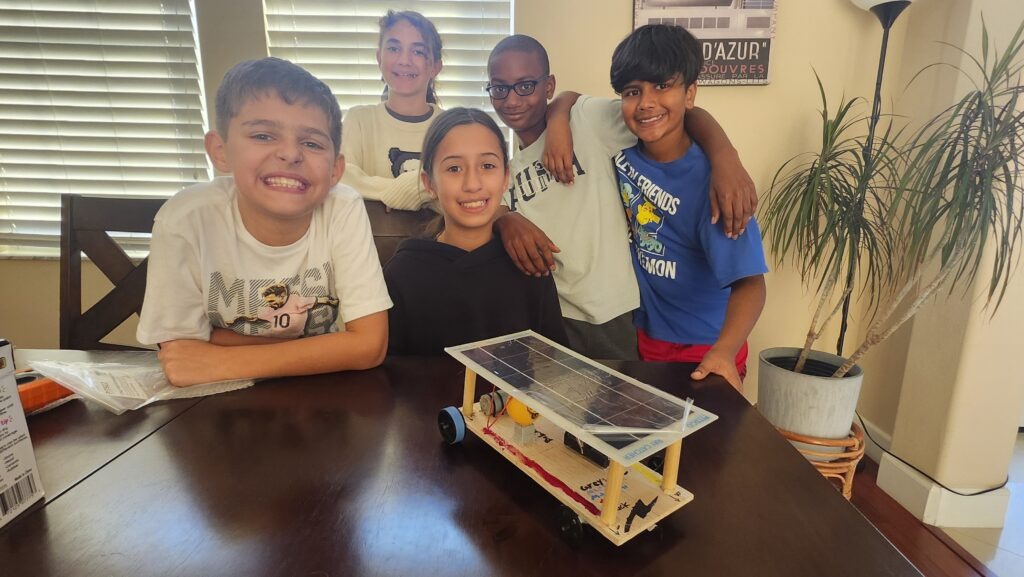
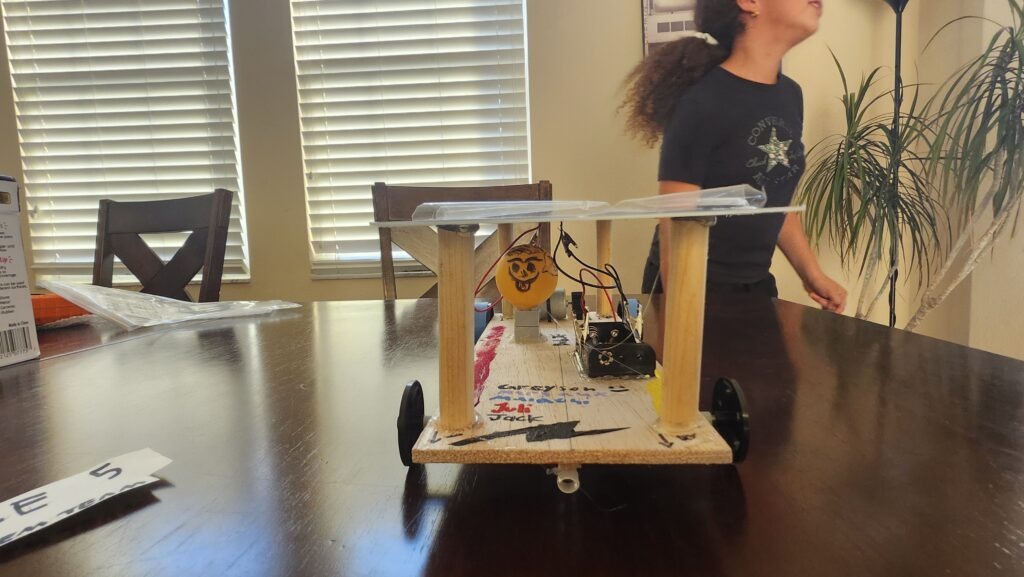
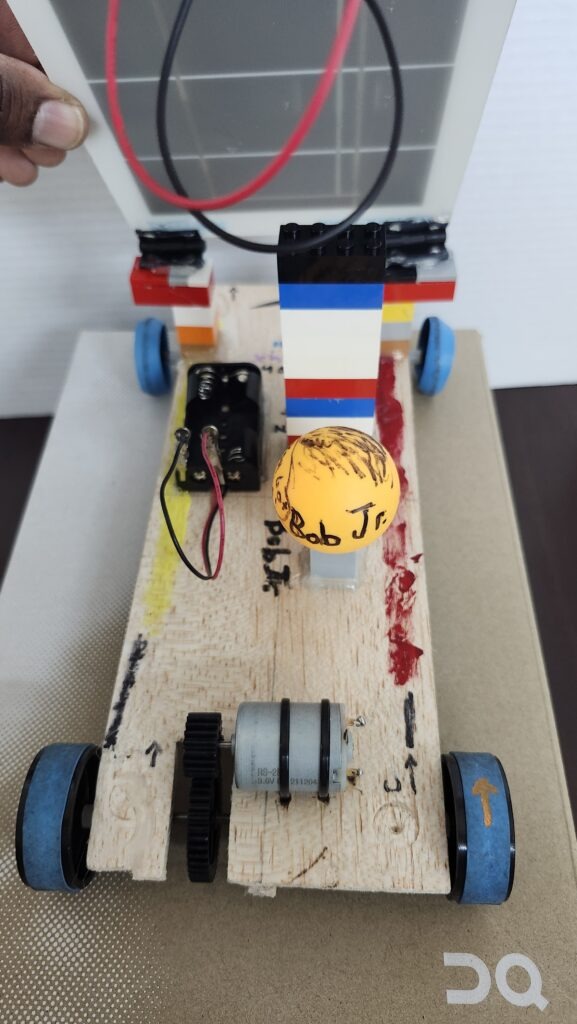
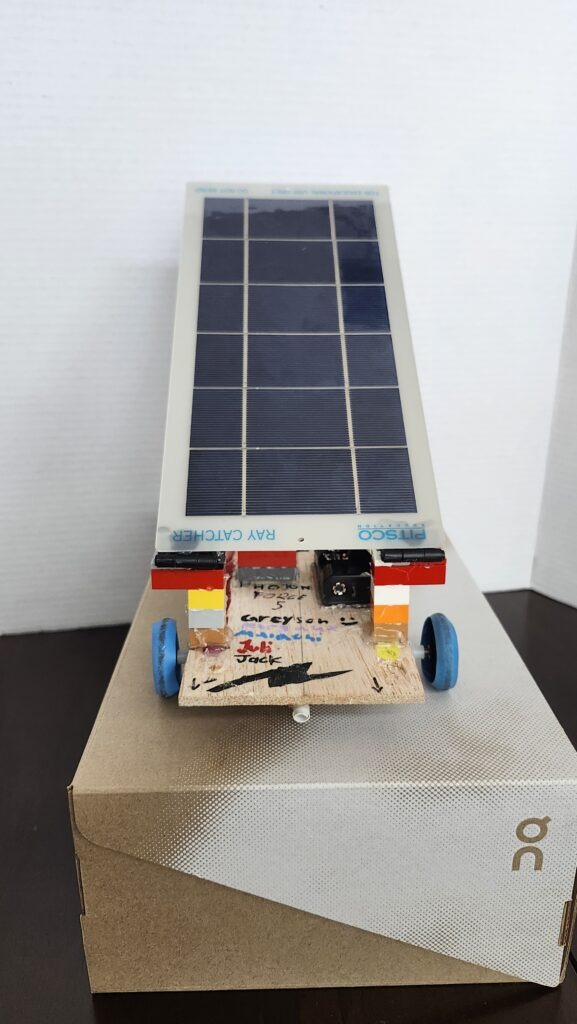
Final Design consists of Lego support columns that are adjustable (by adding or removing blocks) and hinges on the solar panel to allow us to change the angle of the solar panel to maximize solar energy collection based on the position of the sun at different times of the day. Our payload (Bob Jr.) can sit securely in his bucket seat. A battery circuit is available for power during bad weather. The position of the motor mounting allows for the precise interlocking of the teeth of the pinion gear with the valleys of the spur gear. Rubber bands were added to the four wheels for increased traction.
Detailed Description of our Final Car Design (video below)
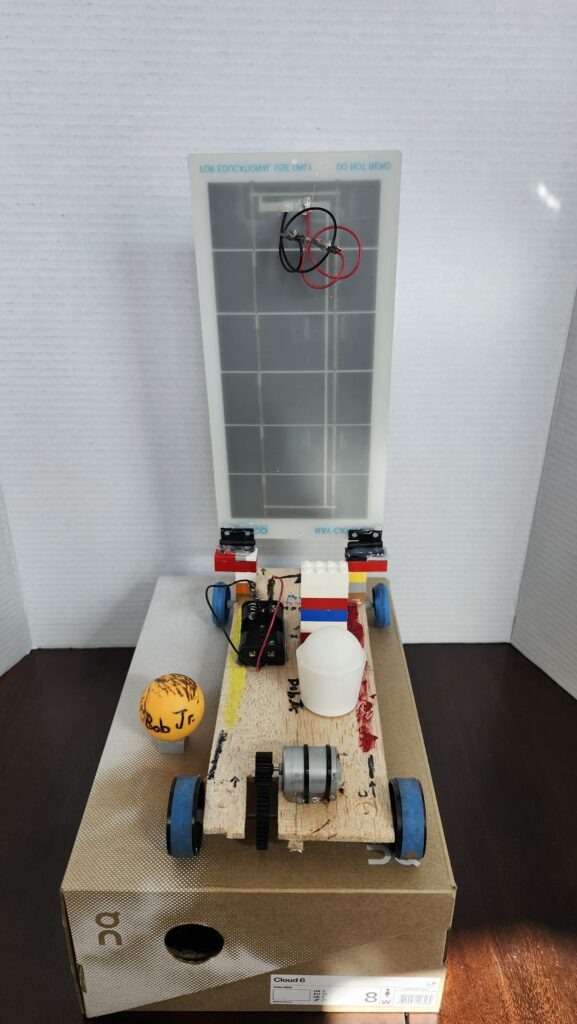
Final Design – Top View
See our guide wire test run (video below)
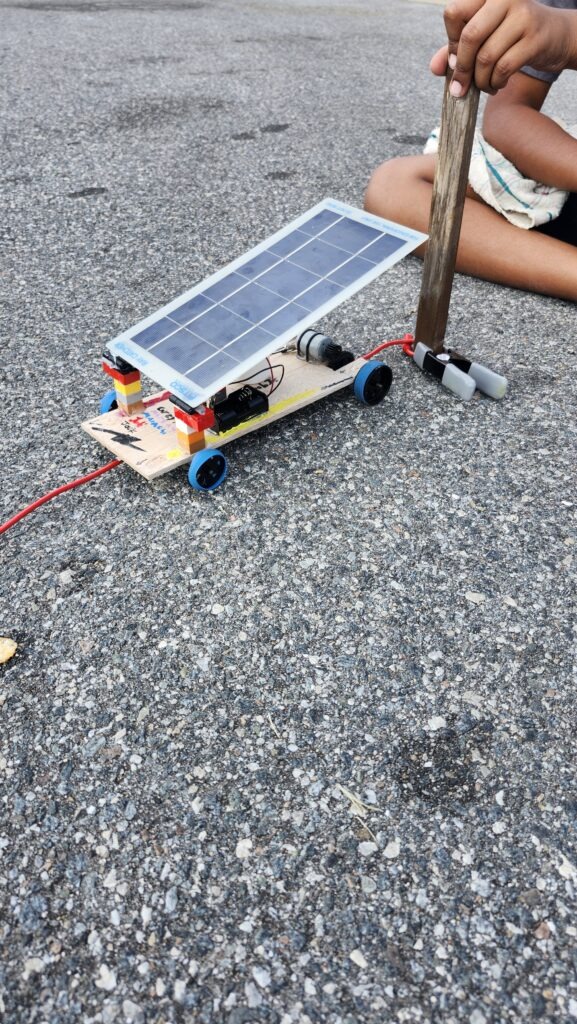
Final Design – We set up for a guide wire test run.
So much hard work went into this project. It looks like everyone learned a lot throughout this entire process. The finished product looks amazing! Good luck at STEM Saturday!! I can’t wait to cheer you all on!
Awesome job. Keep up the good work. Best of luck on Saturday!!!
Great thought process on designing your car and testing through different scenarios. Your testing and gathering feedback to make changes shows the attention to detail. I wish your team good luck on Super STEM Saturday.
What an amazing project! Building a solar-powered car is such a bright idea (literally)! I’m impressed by how the team thought through the design and made it work. Congratulations on creating a successful prototype and showing great STEM skills!
Good Luck PHOTON FORCE 5! I hope all your hard work pays off.
Fantastic design and a really creative solution. Well done.
Love the construction! You can tell all the students put in a lot of thought and work to bring the car to life. Way to go everyone!! So proud of you all!
I really enjoyed this project because it helped me understand gear ratios in much greater depth. I learned how different gear sizes affect speed, which made the concepts much clearer. Overall, the project made me feel a lot more intuitive and interesting.
Awesome design!!! Good luck on Saturday! Great team effort.
Very Proud of our team PHOTON FORCE 5. They worked very hard, I hope they learned a basic understanding of what it takes to take a conceptual idea to a design, to a prototype; followed by testing and improving upon and trouble shooting the original design to a final product.
Good Luck on SUPER STEM SATURDAY
Anik S.